Check out the conversation on Apple, Spotify and YouTube.
Brought to you by - Reforge:

Get 1 month free of Reforge Build (the AI prototyping tool built for PMs) with code BUILD
Today’s Episode
Most PMs are using AI the same way they used Google in 2005.
Type something in. Get something out. Move on.
That is not how the best PMs are using it. The best PMs have stopped treating AI as a search engine and started treating it as a team member. One that already knows their product, their writing style, their strategy. One that does not need to be briefed from scratch every single time.
That shift is what today’s episode is about.
I sat down with Lisa Huang, SVP of Product at Xero, the $18 billion finance platform. She built the AI assistant for the first generation Meta RayBan smart glasses. She created Gemini Gems at Google. She has been an AI PM at Apple, Meta, and Google - three of the most demanding AI product environments in the world.
And she gave us a masterclass on three key topics:
How to build Gemini Gems and AI projects that actually work
What she learned building AI into a wearable device
What the future of the AI PM career looks like
Listen or watch now:
If you want access to my AI tool stack - Dovetail, Arize, Linear, Descript, Reforge Build, DeepSky, Relay.app, Magic Patterns, Speechify, and Mobbin - grab Aakash’s bundle.
Newsletter Deep Dive
As a thank you for having me in your inbox, here is the complete guide to Gemini Gems, building AI features, and navigating your AI PM career.
Gemini Gems - the feature most PMs are ignoring
The three must-have Gems for every PM
How to build one that actually works
What building AI into hardware teaches you
Key AI PM Topics in 2026:
How to build good AI agents
How to measure AI agents
The future of the PM role
How to break into AI PM
1. Gemini Gems - the feature most PMs are ignoring
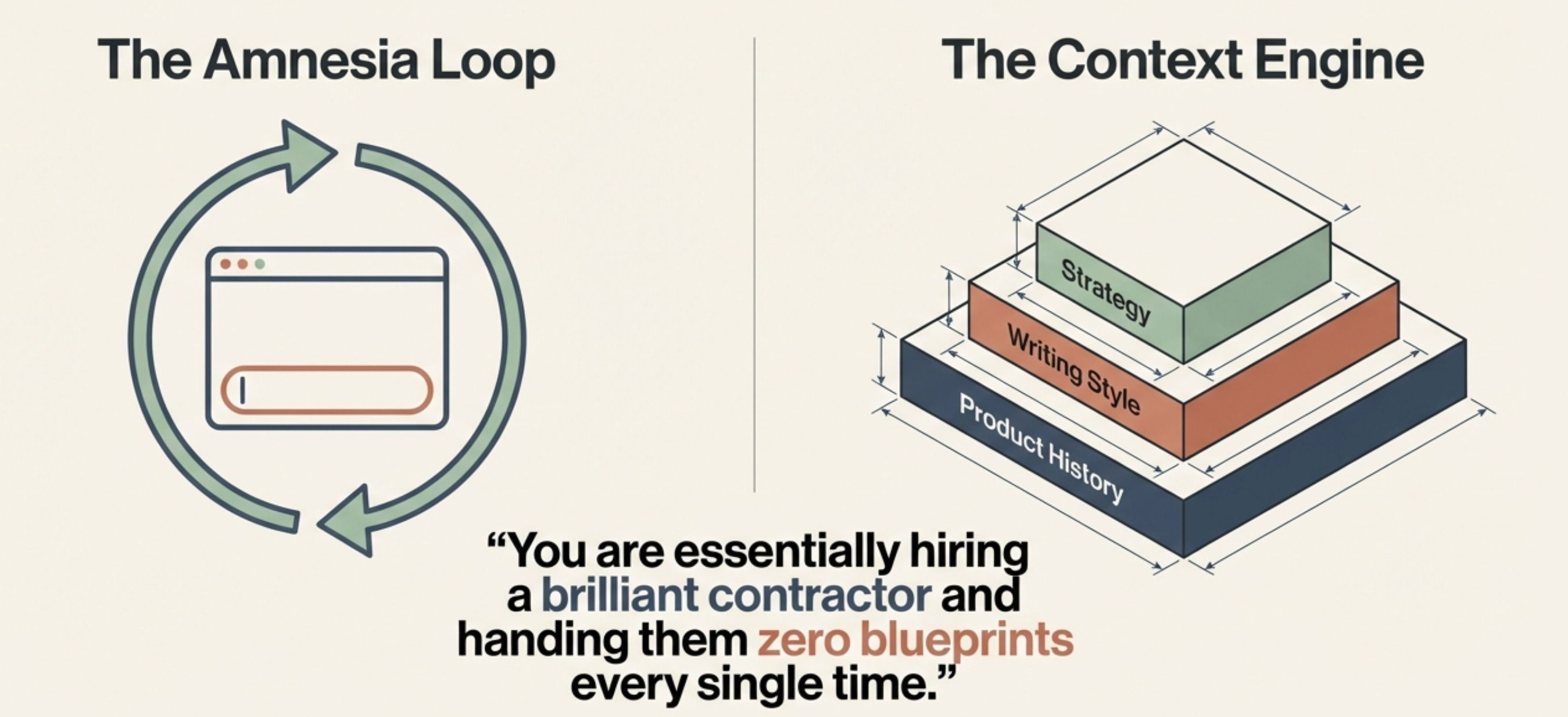
Here is the core problem with how most people use LLMs.
Every time you open a new chat, you start from scratch. Your role. Your company strategy. Your writing style. Your product history. All gone. You are essentially hiring a brilliant contractor and handing them zero blueprints every single time.
Gemini Gems close that gap.
Standard Gemini is your general contractor. Capable. Powerful. But needs a full briefing every single time. A Gem is your master craftsman. It already knows your house. It knows your preferences. You ask once and it delivers exactly what you need.
The same principle applies to Claude Projects and ChatGPT custom GPTs. The name does not matter. The principle does. Stop having generic conversations. Start building personalized AI that holds your context permanently.
2. The three must-have Gems for every PM
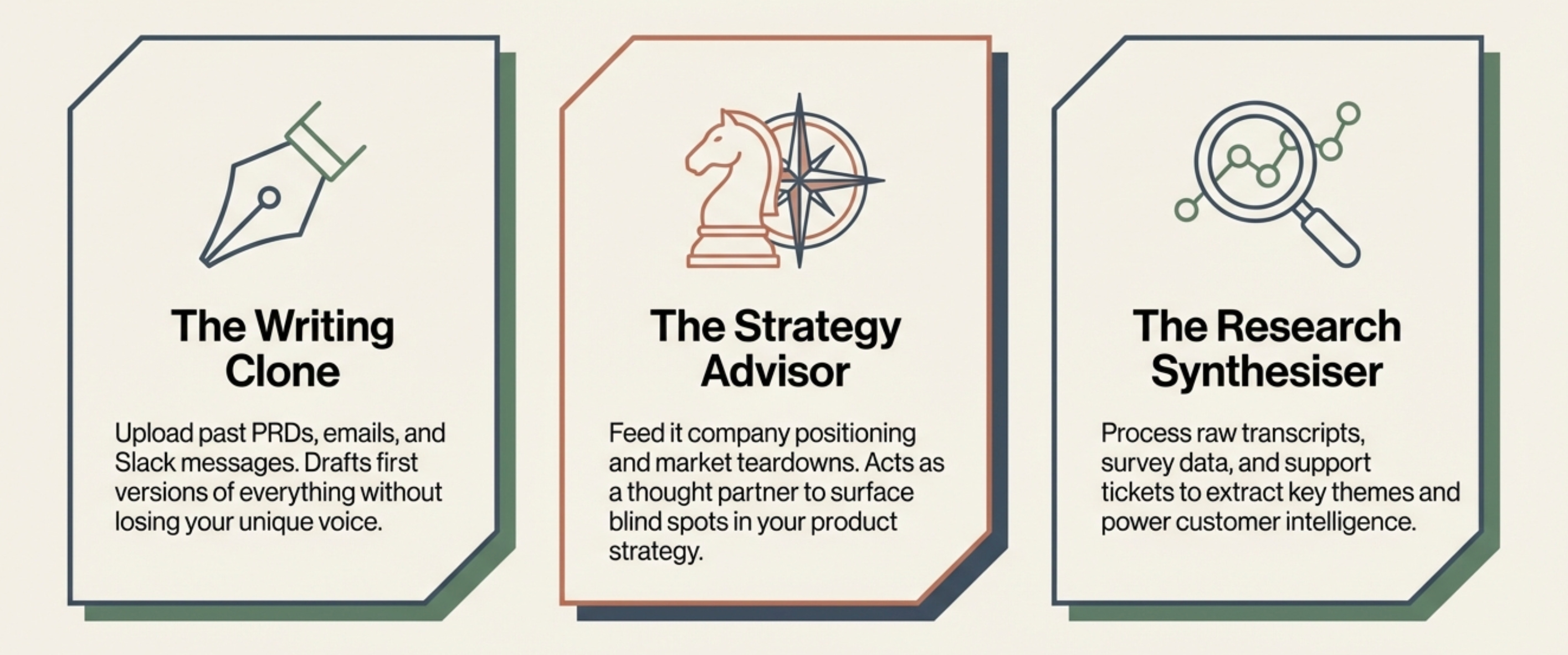
Gem 1 - The writing clone
PMs communicate all day. To engineers. To stakeholders. To executives. To customers.
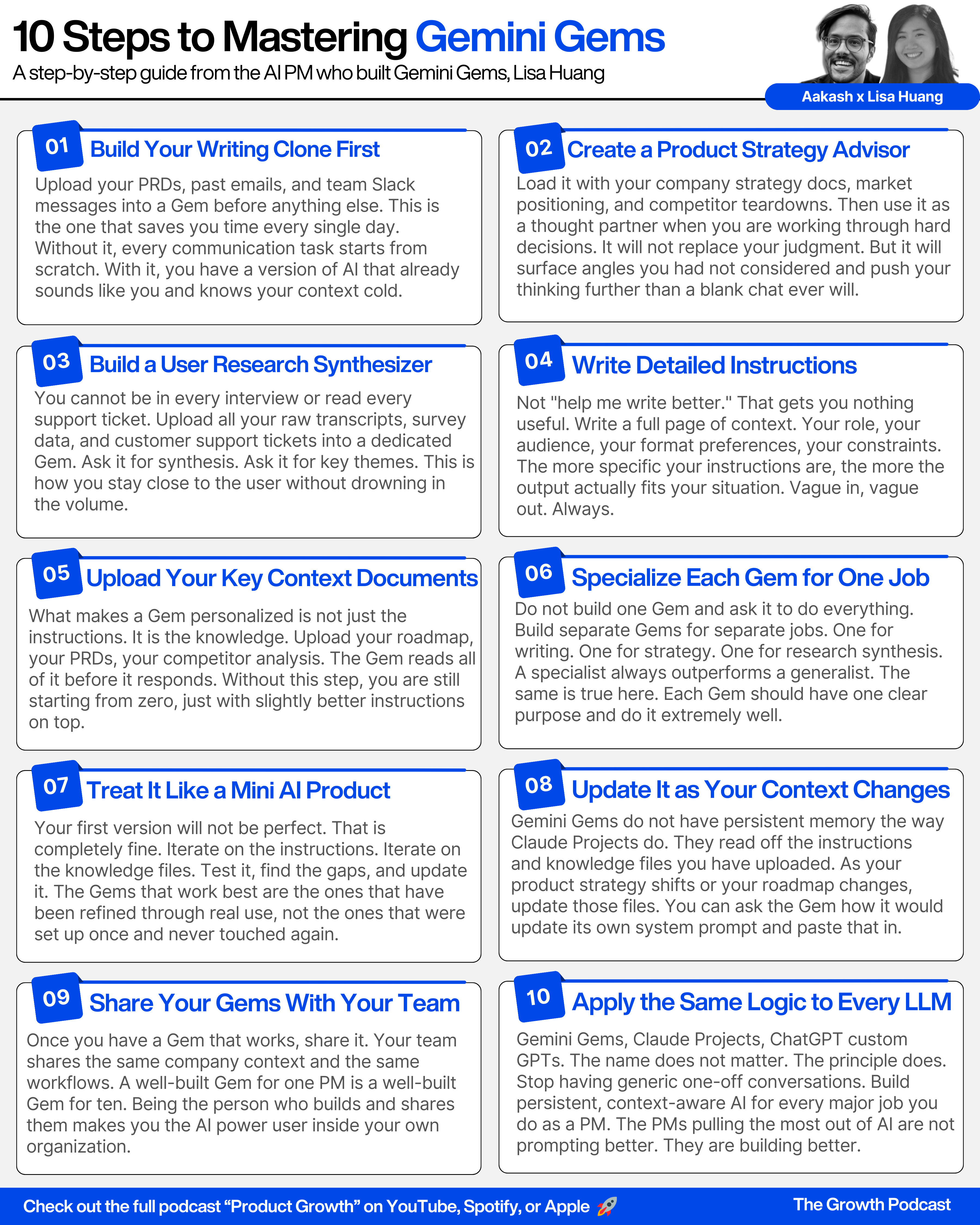
Upload your PRDs, past emails, and team Slack messages. Build a version of your LLM that sounds like you. Use it to draft the first version of everything. You will not lose your voice. You will just get it back faster.
Gem 2 - The product strategy advisor
Feed it your company strategy docs, market positioning, and competitor analysis. Use it as a thought partner when you are working through hard decisions.
It will not replace your judgment. But it will surface angles you had not thought of. That is the product strategy edge most PMs are leaving on the table.
Gem 3 - The user research synthesizer
You cannot be in every interview. You cannot read every support ticket.
Upload the raw transcripts, survey data, and customer support tickets. Ask for synthesis. Ask for key themes. This is the kind of AI-powered customer intelligence work that separates good PMs from great ones.
Your email may get cut off around this point. Continue reading online or in the app:
3. How to Build a Gem That Actually Works
Go to Gemini. Click Gems. Create a new one.
Three things matter.
Step 1 - Write detailed instructions
Not “help me write better.” That gets you nothing.
Write a full page of context. Your role. Your audience. Your format preferences. The more specific you are, the more personalized the output. Think of it the same way you would brief a new hire. Give them everything they need to do the job without asking you twice. (Use AI to help.)
Step 2 - Upload your key context documents
What makes a Gem personalized is not the instructions alone. It is the knowledge. Upload your PRDs, past emails, competitor teardowns, roadmaps. The Gem reads all of it before responding.
One distinction worth knowing. Unlike Claude Projects where you can train the project over time through conversation, Gemini Gems work strictly off what is in the instructions and knowledge files.
So as your context changes, update those files. You can even ask the Gem how it would update its own system prompt based on your conversation. Then paste that update in.
Step 3 - Iterate
Your first version will not be perfect. That is fine. Treat it like a mini AI product you are shipping for yourself. Iterate on the instructions. Iterate on the knowledge. The Gem gets better the more you invest in it.
The biggest mistake is vague instructions. Fix that first and everything else improves.
4. What building AI into hardware teaches you
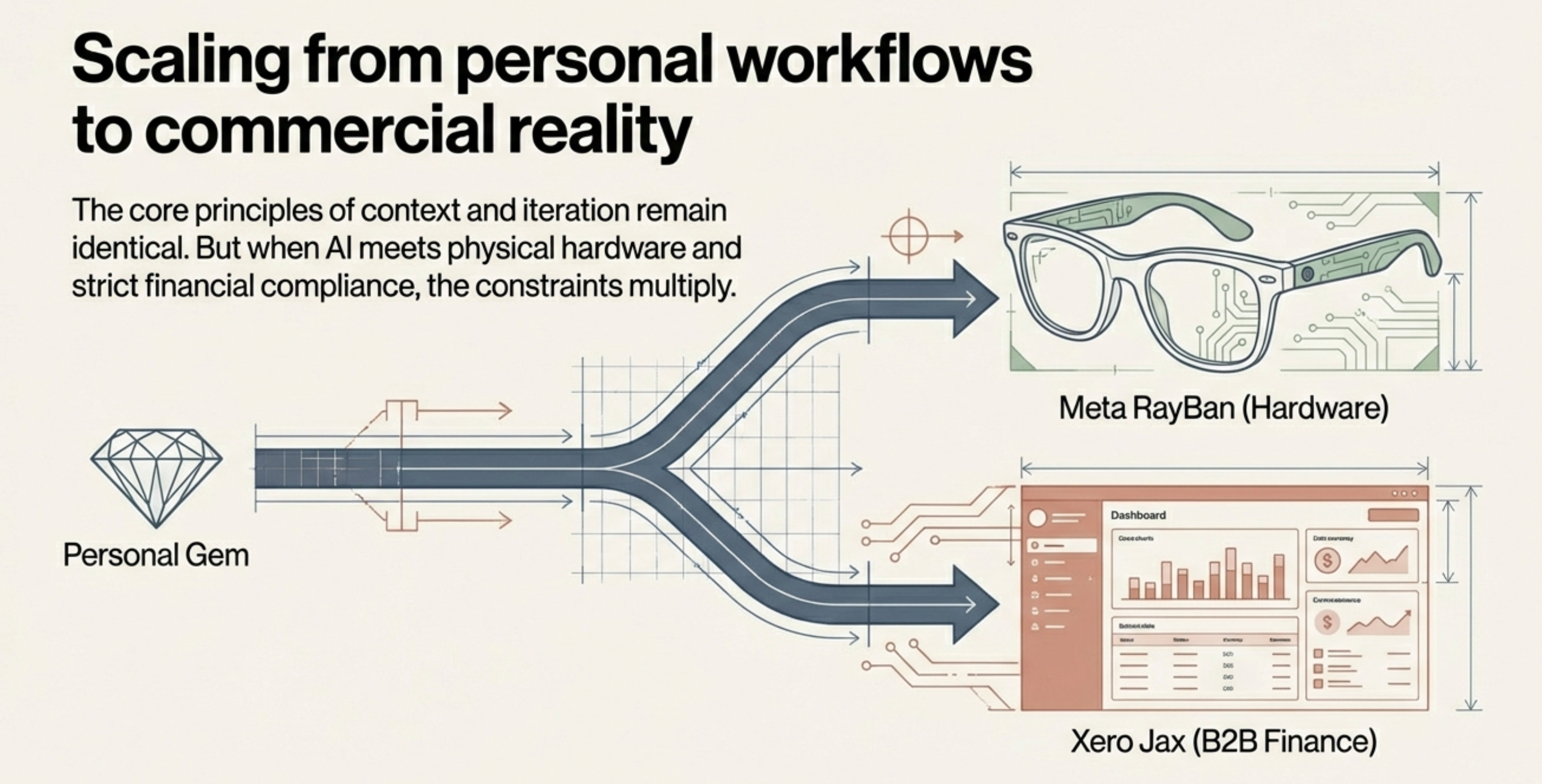
The first generation AI assistant for Meta RayBan smart glasses launched years before the product hit 4 million sales. That zero-to-one process surfaced constraints most PMs never face.
When you put AI into a wearable, the rules change completely.
Weight. Battery life. Privacy. Bystander concerns. The fact that a fashion company like Luxottica does not move like a Silicon Valley engineering team. All of these compress your design space in ways that a purely software product never would.
And then there is the processing question - cloud or on-device?
Cloud is the default today. But on-device is the future. Once you are wearing a device on your face all day, people are going to want their data staying local. As models get smaller and more efficient, the technical barriers to on-device are dropping fast. Privacy wins over performance every time when the device is that personal.
The lesson for any PM building AI features in any context: do not fall in love with the technology. Understand it deeply. The best AI products live at the exact intersection of what the user genuinely needs and what the technology can reliably do today.
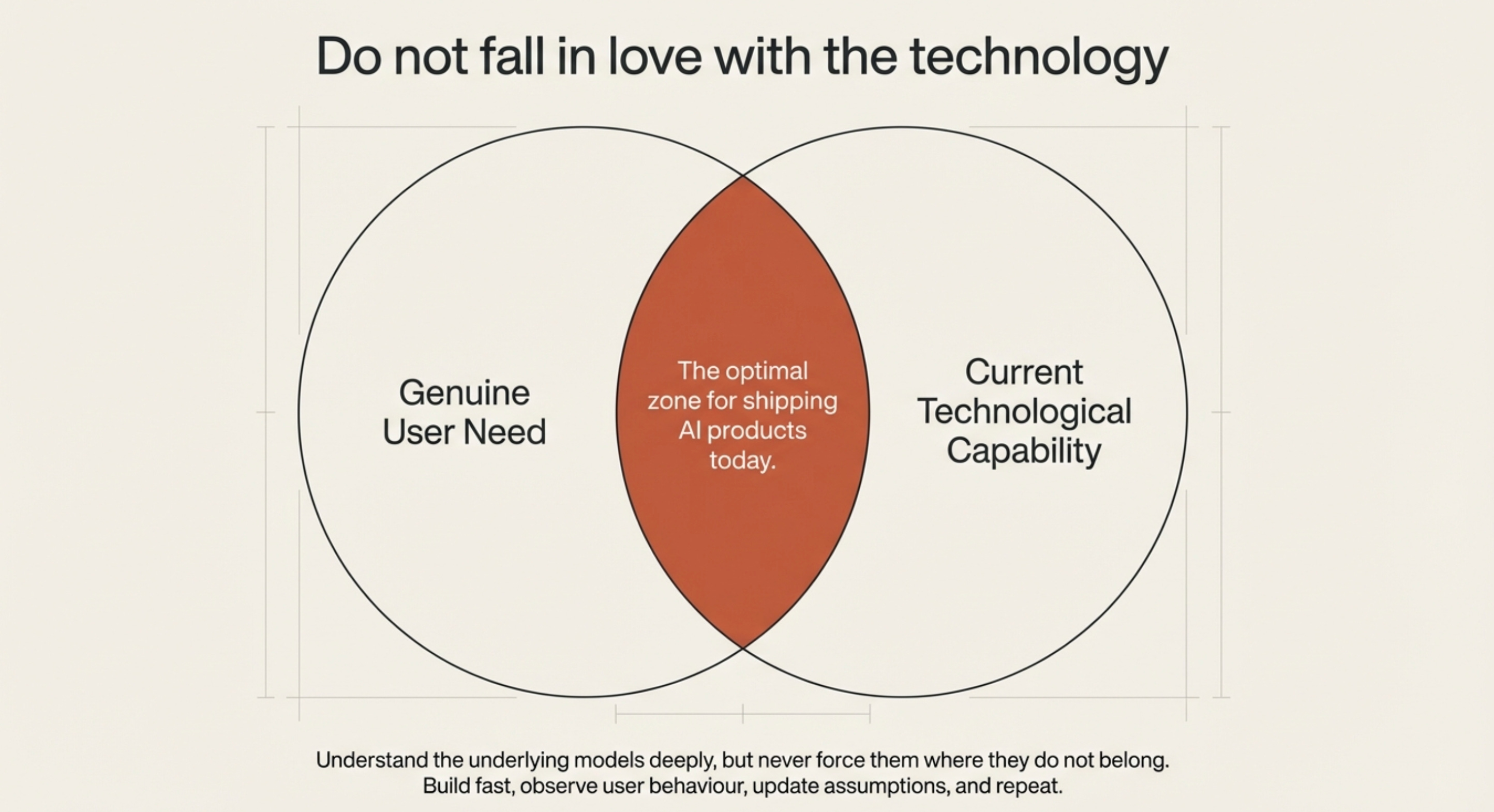
Build fast. See what users do. Update your assumptions. Repeat.
5. Key AI PM Topics in 2026
Since Lisa is such a tenured AI PM leader, I had to ask her about all the hot AI PM topics right now.
5a. How to build an accurate AI agent
Here is what makes building AI agents in any high-stakes domain genuinely hard.
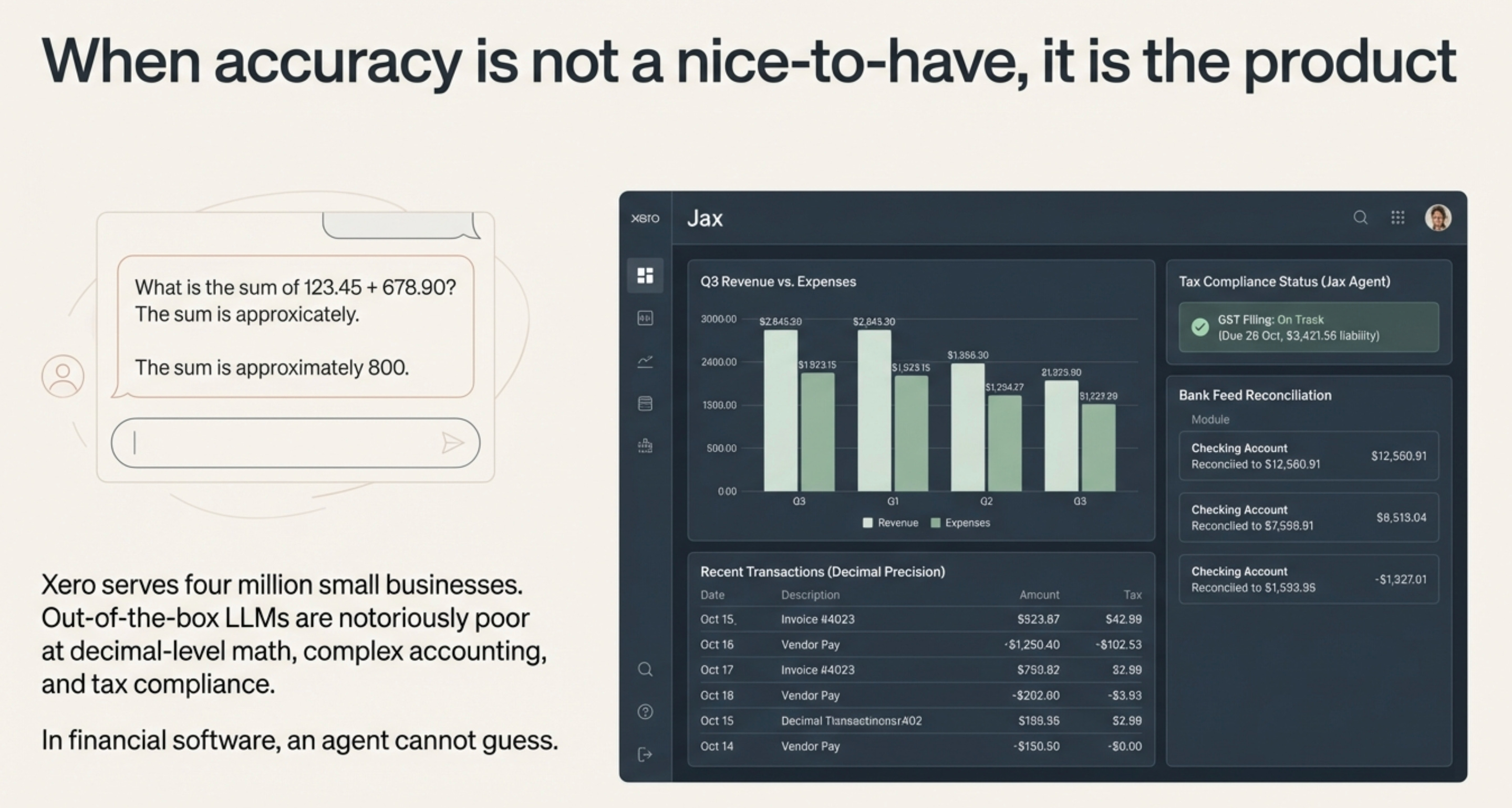
Accuracy is not a nice-to-have. It is the product. In finance, the decimal matters. In legal, the clause matters. In healthcare, the dosage matters. And LLMs out of the box are not naturally great at any of these.
Two things close that gap:
Advantage 1 - Domain knowledge
The companies winning at agents are not just wiring up a generic LLM. They understand every workflow. Every stakeholder. Every acceptable accuracy level at each step.
You have to craft the agent experience around your specific constraints. What are the tasks? What are the subtasks? Where does a 90% answer suffice and where does it fail the user entirely? Map that before you build.
Advantage 2 - Proprietary data
Generic agents give generic answers. The agents that win are the ones with data nobody else has.
Transaction-level data. Interaction history. Domain-specific corpora. That data lets you personalize to each user’s actual situation. It also lets you surface benchmarks and insights that a general-purpose model simply cannot.
On architecture: use a hybrid system. LLMs in multi-agent workflows where it makes sense, but programmatic code where you need tighter control over reliability. Not everything should be non-deterministic. Know when each applies.
5b. How to measure an AI agent
This is the question I get most from AI PMs right now. How do you measure something that is non-deterministic and evolving fast?
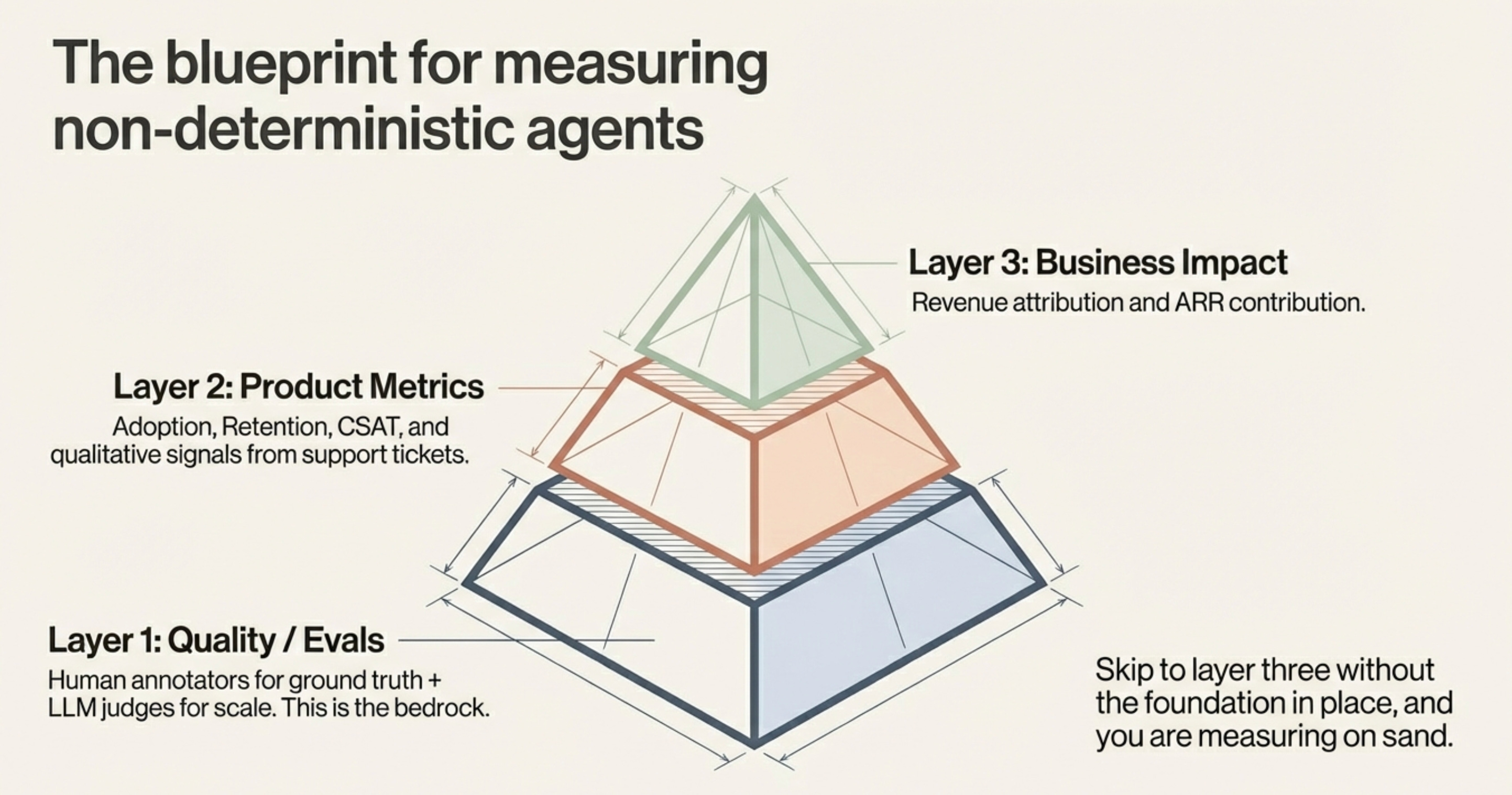
Three layers. They build on each other. Do not skip ahead.
Layer 1 - Quality
Is the AI doing what it is supposed to do?
This means evals. Human annotators. LLM judges. You need all three because none of them alone scales. Human annotators give you ground truth. LLM judges give you scale. Evals give you a consistent framework across use cases.
Track quality regularly across all use cases. Understand the gaps. Know which investments close which gaps. This is your foundation. You cannot build reliably on top of it until it is solid.
Layer 2 - Product metrics
Once quality is solid, standard product metrics apply. Adoption. Usage. Retention. CSAT. MAU or WAU depending on the use case.
Also track qualitative signals. Social media. Customer conversations. Support tickets. Users will tell you things in those channels that no dashboard will surface.
Layer 3 - Business impact
Revenue attribution. Retention influence. ARR contribution.
Every company measures this differently. What matters is that you have a system for it and that you track it consistently. AI investment needs to show up somewhere on the business scorecard.
The order matters. Quality first. Product metrics second. Business impact third. Skip to layer three without the foundation and you are measuring on sand.
5c. The future of the PM role
A lot of PMs I talk to are anxious about this. I hear it constantly.
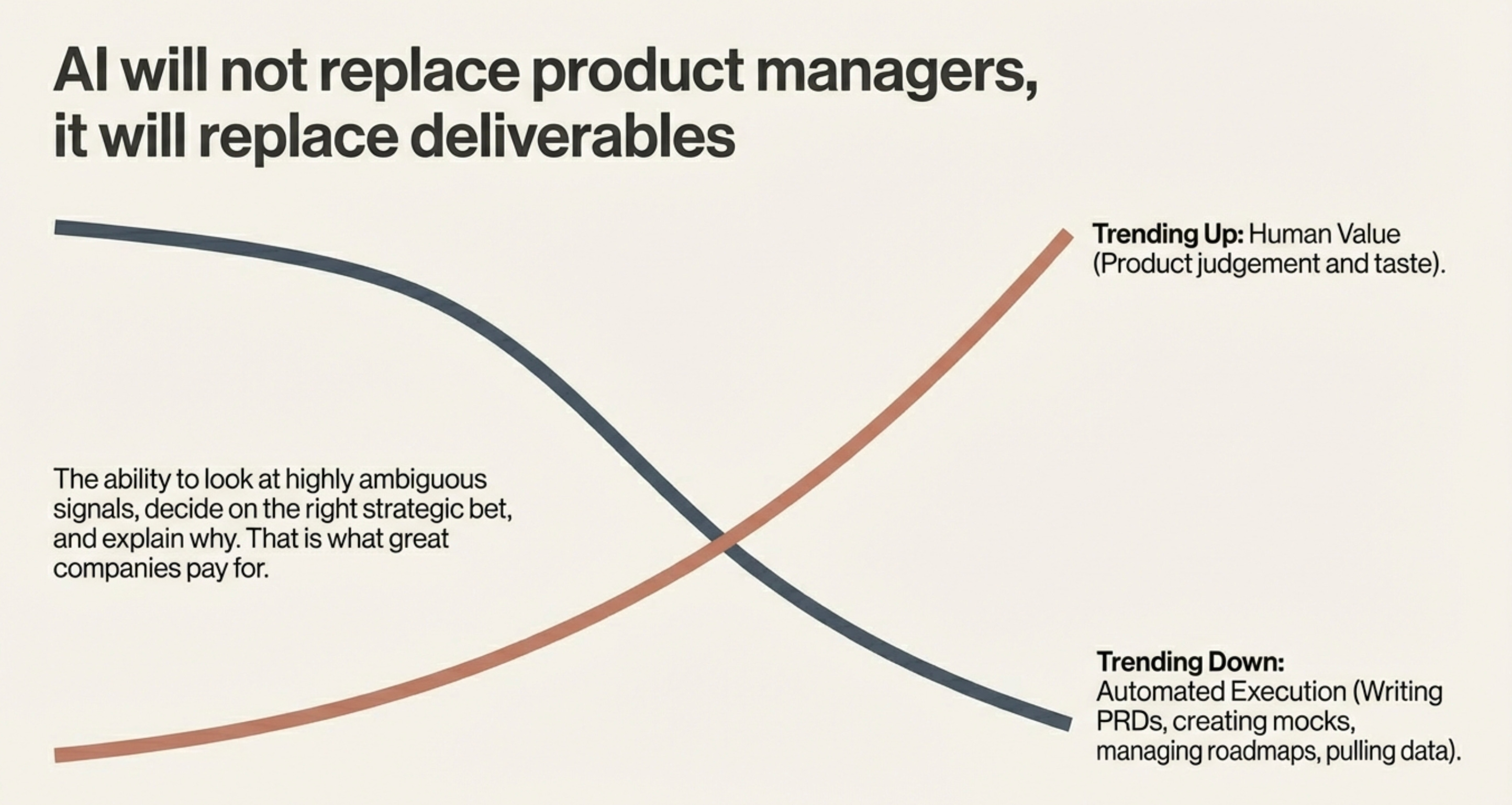
The layoffs feel disproportionate. Junior PM roles are harder to get. The director and group PM layers are compressing. The question I keep getting is: is this career still worth pursuing?
Here’s what I’d say:
AI will not replace PMs. What it will replace is the execution work that fills most of a PM’s day today. Writing PRDs. Creating mocks. Managing roadmaps. Pulling data. All of it will be accelerated or automated.
But product judgment? The ability to look at ambiguous signals and say this is the right bet and here is why? That is not going anywhere. That is what PMs get paid for. Not the deliverables. The taste.
What is changing is the structure. PM-to-engineer ratios will compress. The pure PM role is evolving into a hybrid. The expectation is becoming that PMs also build. Not just spec and hand off, but prototype, design, and code enough to show what they mean. As Lisa said:
Now is a time of transformation and everyone has the availability to go do that.
5d. How to break into AI PM
The excuse I hear most is “I don’t work on AI features at my company.”
It is not an acceptable excuse.
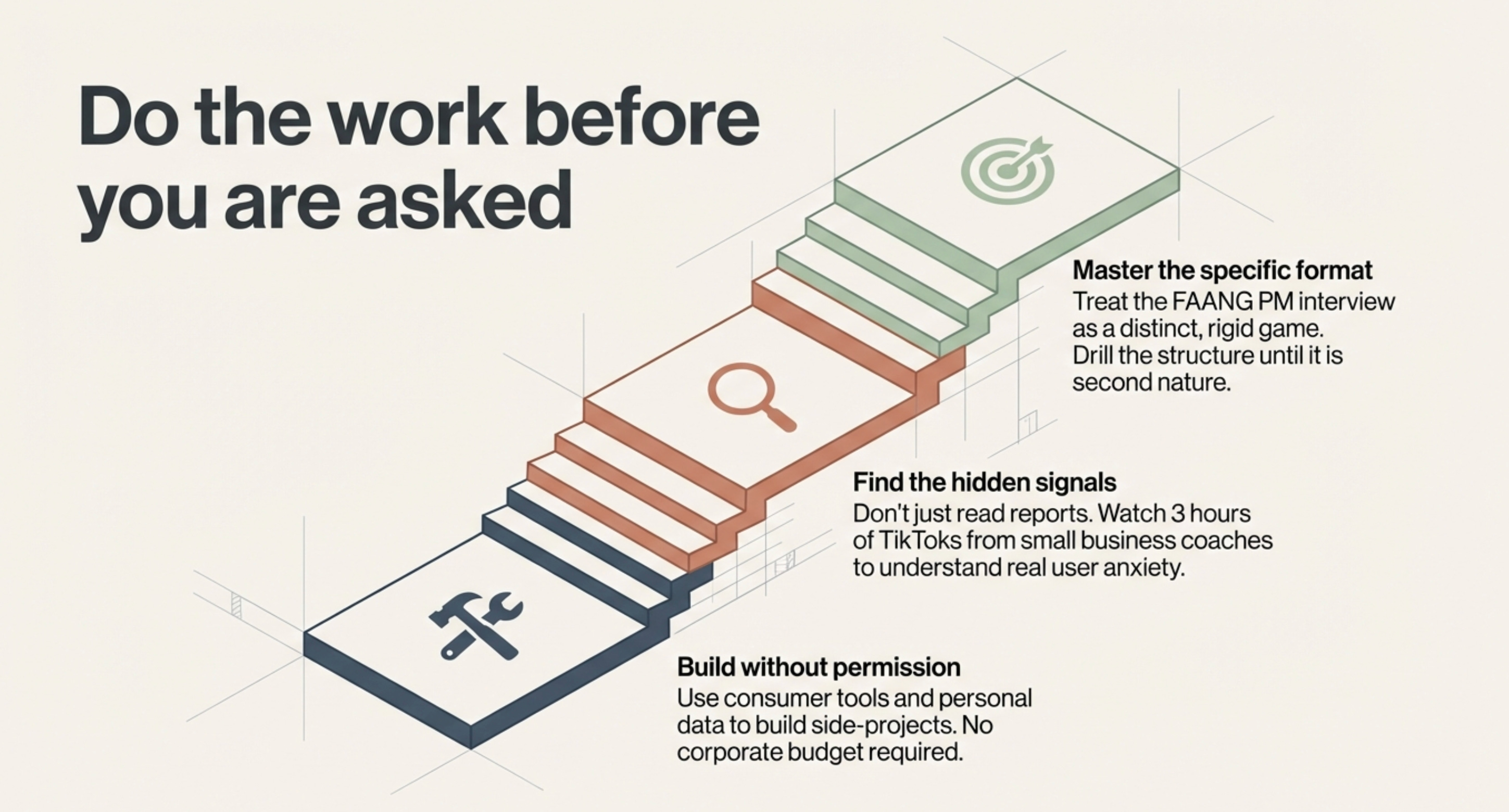
You do not need your company’s permission to build AI products. You do not need a budget. You do not need a team. Claude, OpenAI, Gemini, all of them give you access to the same models that companies are building on. Most companies are not fine-tuning anything. They are using the exact same consumer tools you already have access to.
So build. Build Gems. Build projects. Build small AI products that solve problems you actually have. Use your personal data so there are no company restrictions.
How to stand out in an interview
One candidate who got hired for a senior AI role had zero AI experience going in. Lisa was not sure about them. Then in the first interview they said:
“I saw you are building financial tools for small businesses. I went and watched three hours of TikTok videos from coaches who work with small businesses. Here is what they said about what those businesses actually need financially.”
Nobody else had done that. Not one candidate. You can guess who Lisa hired.
Do the work before you are asked to. That is the whole strategy.
The roadmap to break in
Get direct AI experience in your current role if you can. If not, build on the side. Invest in your network because referrals still matter more than most people admit. Show up well in every job because today’s colleagues become tomorrow’s connections.
When you are ready to interview, treat interview prep as its own skill. Practice out loud. Get mock interviews with people who have been inside those companies. Drill until the structure is second nature.
The FAANG PM interview is a specific game. Product sense. Product execution. Behavioral. Case questions. You can be a great PM and still lose if you cannot perform in that format in that time window. Practice the format, not just the content.
Where to Find Lisa Huang
Related Content
Newsletters
Podcasts
PS. Please subscribe on YouTube and follow on Apple & Spotify. It helps!