

Check out the conversation on Apple, Spotify, and YouTube.
Brought to you by
AutonomyAI - Go from a product manager to a product builder and ship changes to the codebase as PRs
Today’s Episode
Last week, Atlassian (about $37B market cap) reported earnings:
Revenue up 24% to $1.77B
Cloud revenue up 31%
And the stock still fell 17% after hours. That's how jumpy the market is about SaaS right now.
It's an AI market right now.
And if you run a website builder, the competition from AI is even more direct. That's why we saw Squarespace lay off 19% of its staff last week.
So I sat down with Linda Tong, CEO of Webflow and former CPO at AppDynamics and Tapjoy. Webflow raised at a $4B valuation in 2022. That was the same era as Miro and Airtable:
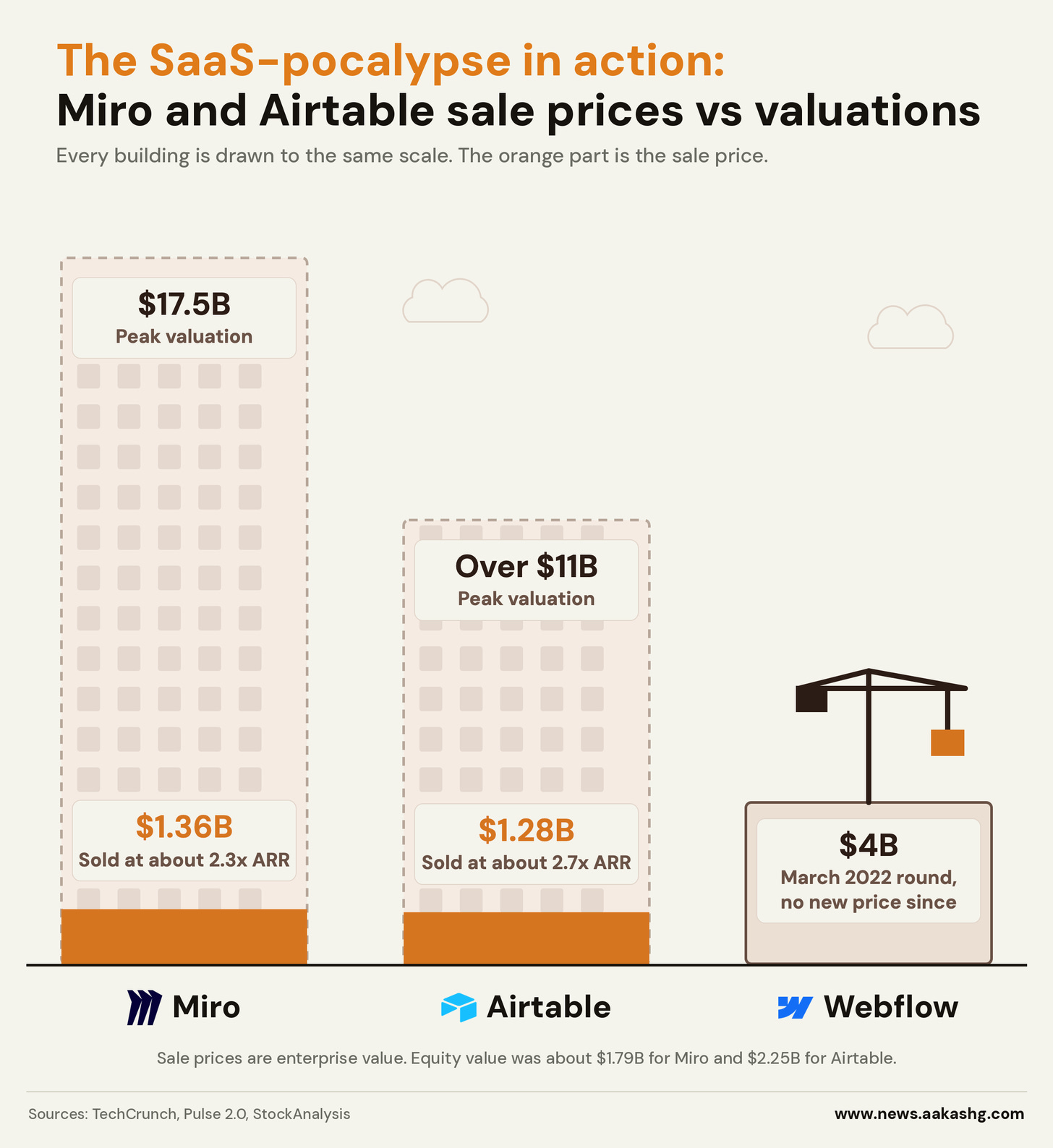
We know where those ended up. Both sold in the 2-3x multiple range to Bending Spoons.
Both companies pivoted heavily to AI. But it didn't pan out in their valuations.
So how do you pivot to AI the right way? That's what I covered in today's episode with Linda.
And today's newsletter deepdive goes one step further.
Check out the full episode with Linda, which includes what she looks for when hiring AI PMs:
A Quick Plug
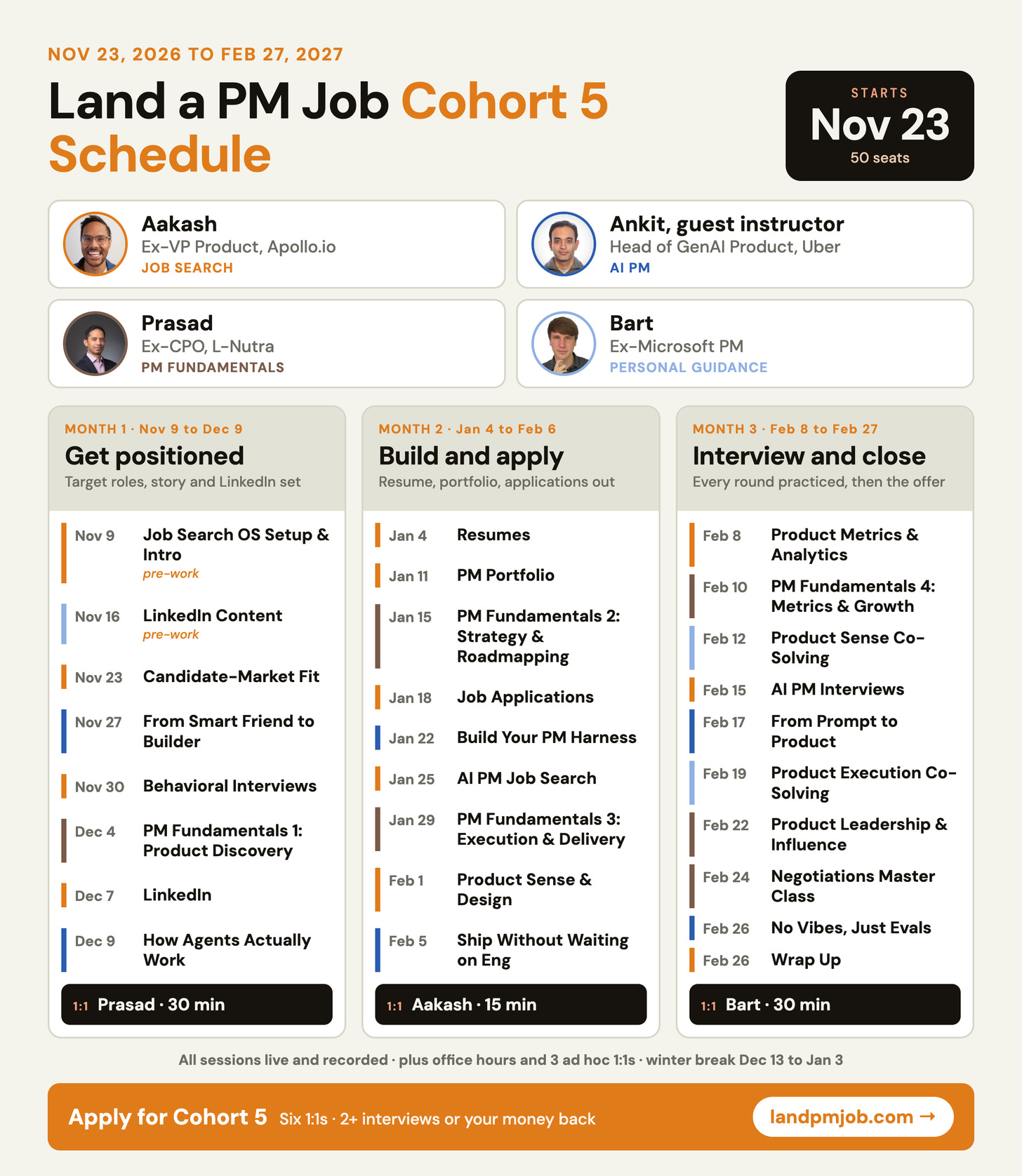
I'm starting the next cohort of my Land a PM Job program. We just finished the week -2 class on Monday, setting up your Job Search OS.
We have a jam packed schedule to help you with your search through March:
Newsletter Deep Dive
Here's my complete guide to AI-proofing your SaaS company, based on the public market data and my conversations with SaaS CEOs like Linda:
Know where you stand
Webflow's three bets
Build the team to run the bets
AI gives your customers version one for free. Webflow is betting the company on getting paid for everything after it, in three bets, and the public market is already rewarding the companies running each one.
1. Know where you stand
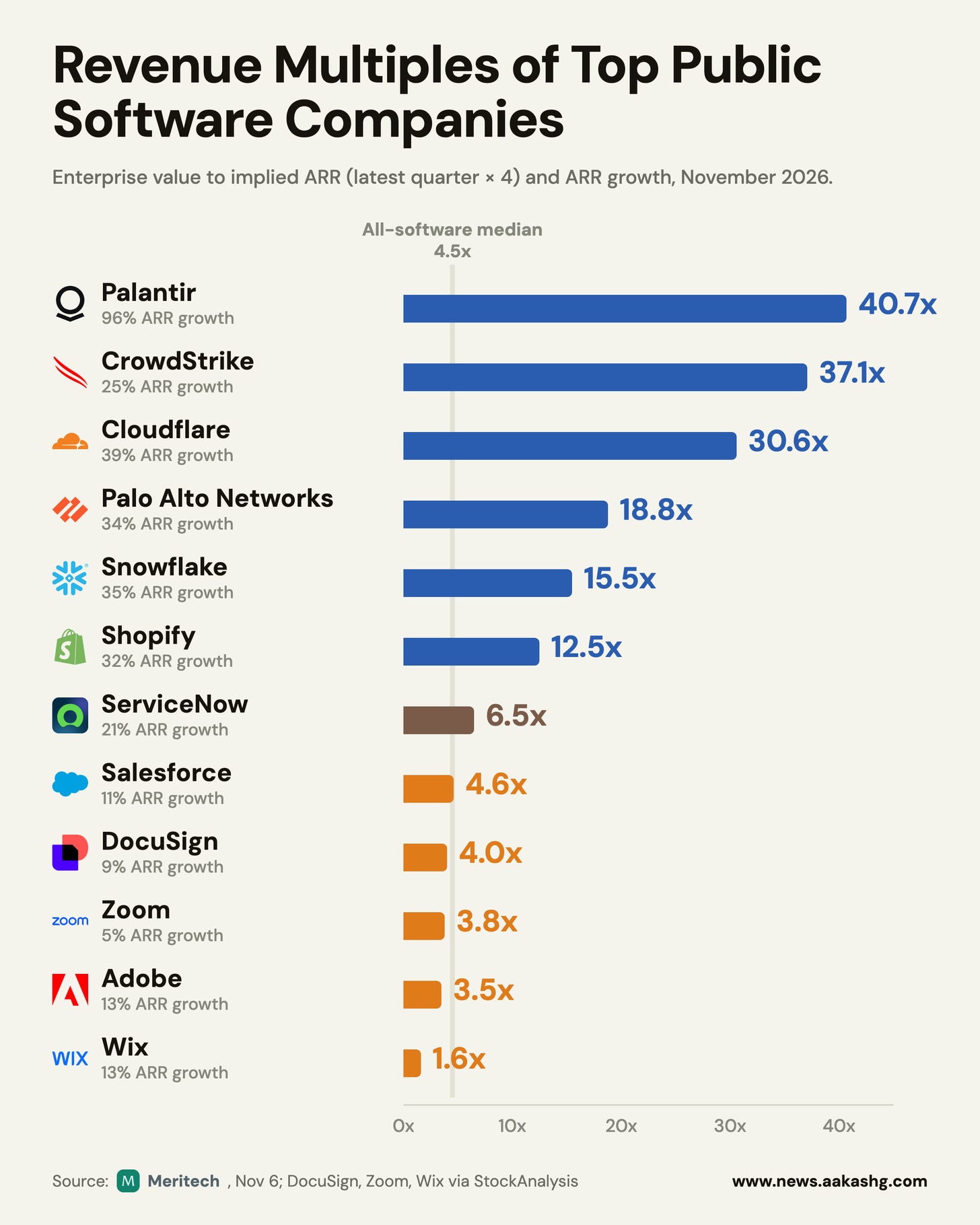
The talk of a SaaS-pocalypse is somewhat overblown. The market is still willing to pay for growth in names perceived as having AI tailwinds:
As you can see:
Palantir's 96% ARR growth is driving its 41x multiple
Meanwhile CrowdStrike has a massive 37x multiple because it's perceived to benefit from AI
On the other hand, the giants of SaaS, Salesforce and Adobe, are hurting with 3.5-4.6x multiples
The slow growing companies are priced with lower multiples. This is the old school PEG ratio brought to SaaS.
And the takeaway for PMs and product leaders is:
Push up your growth rate to push up your multiple.
Here's the data that shows it. The higher the multiple, the faster the growth:
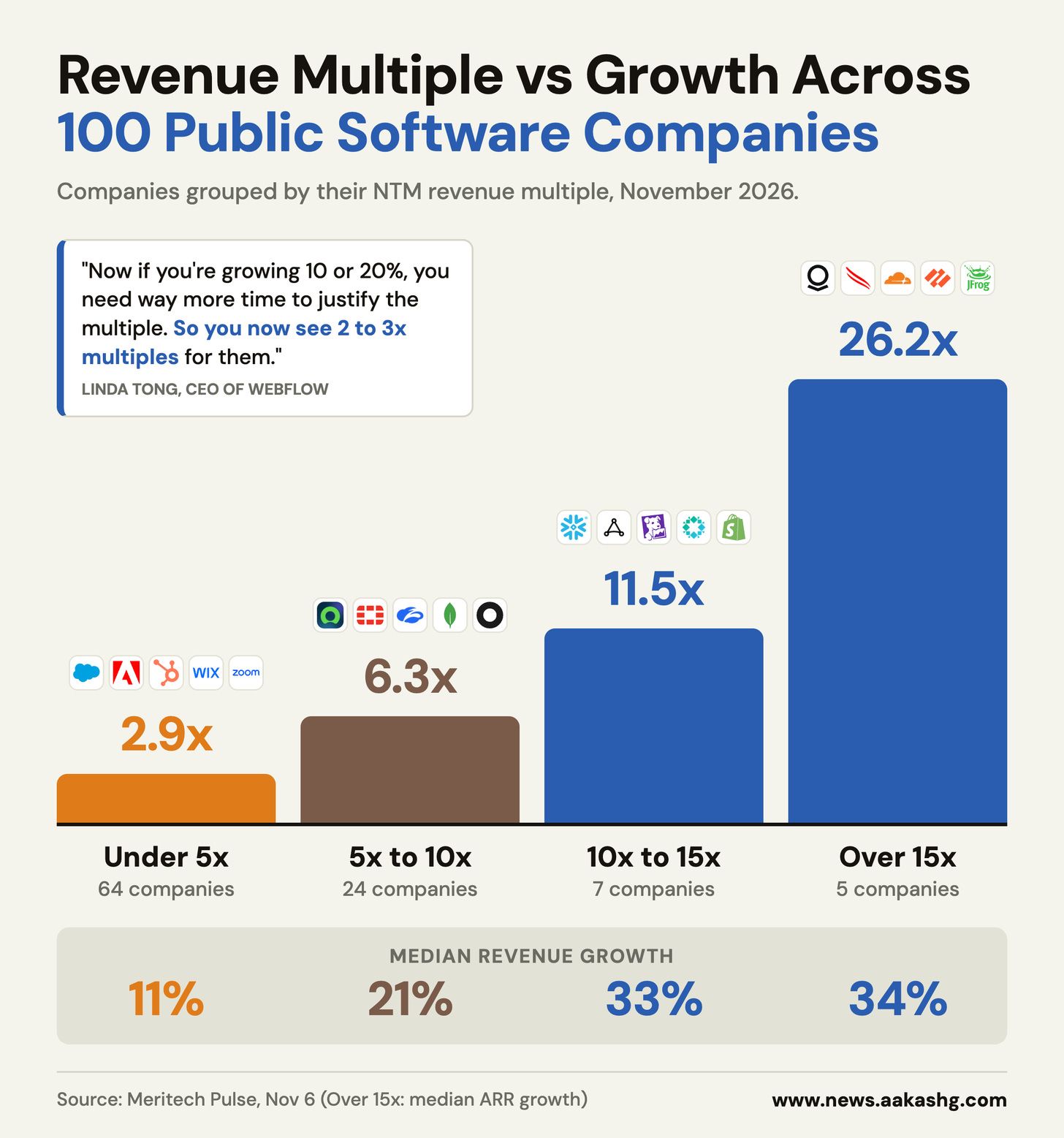
I looked at the 64 companies under 5x multiples. Their median growth rate was 11%. Meanwhile the companies over 15x grew a median 34%.
And your valuation from 2021 and 2022? Take Linda's advice and forget about it:
"Valuations from 2021 and 2022 just aren't believable."
2. Webflow's three bets
So the challenge is really to end up in the high growth bucket. The way there is to understand what AI does well.
AI is really, really good at version one. That's what Claude and ChatGPT's site builders excel at.
And that creates the opportunity for Webflow:
"The majority of our business sits after you hit publish."
Webflow is turning that into three bets:
Bet 1: Do what AI isn't good at. Build the work AI leaves behind once the first version ships.
Bet 2: Pick a buyer AI can't serve. Go deep on one team instead of serving everyone a little.
Bet 3: Turn AI into your channel. Let the labs make version one, then bring the customer home.
Bet 1: Do what AI isn't good at
Webflow has focused on everything AI isn't good at:
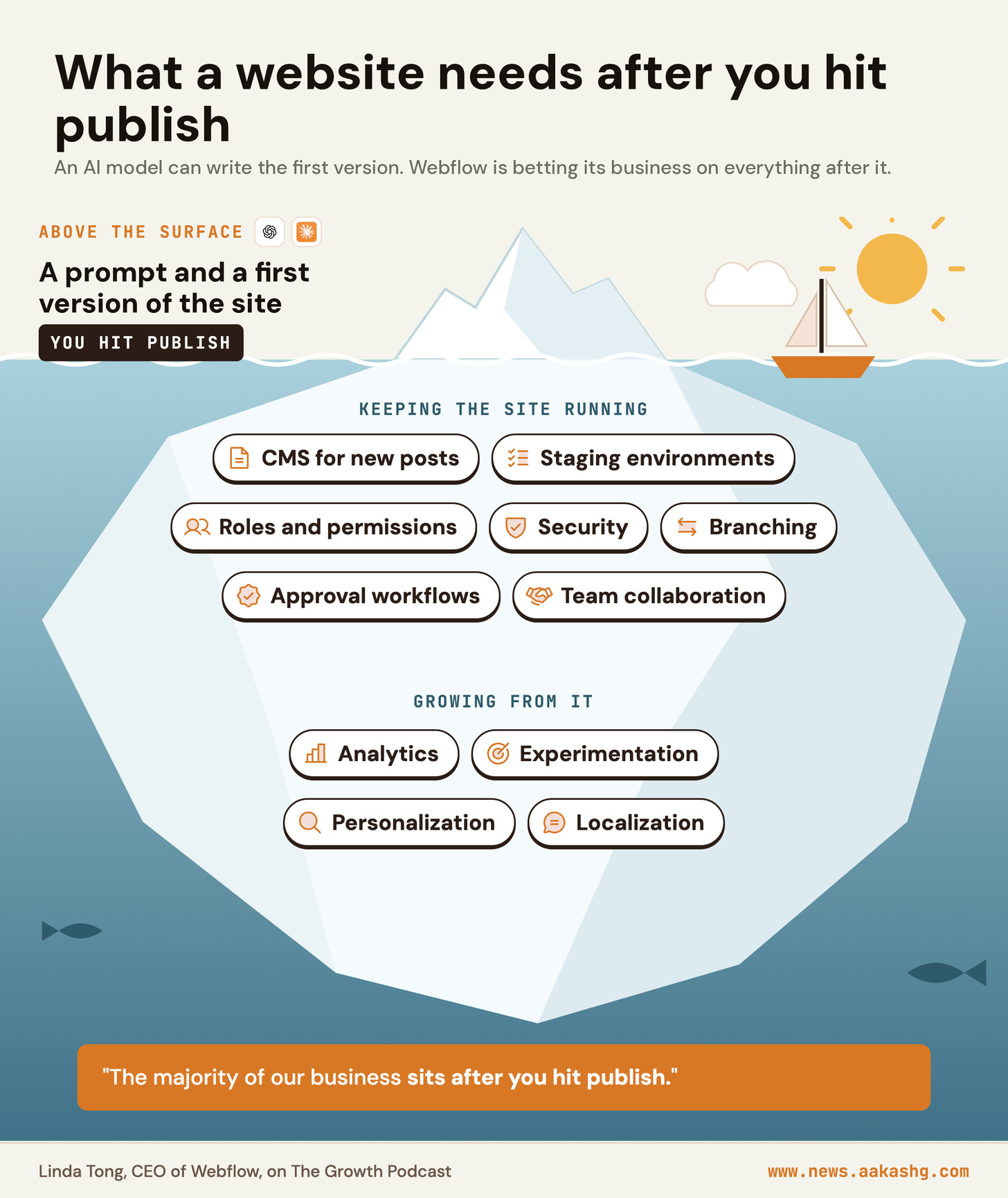
You see, when you're using ChatGPT or Claude, every change means prompting. With Webflow, the content writer and your team can just fill in fields and publish without any prompts or complex Claude Code setup.
Same for the rest of your team. That's how Webflow has grown with boomerangs. As Linda tells it, they say:
"We went down this path and it's totally effed. I need to come back to Webflow. Please don't shut it off. We're back."
You need to find the same wedge for your product. How can you get boomerangs, and how can you grow?
You have to figure out what AI is good at and build what AI is not.
Bet 2: Pick a buyer AI can't serve
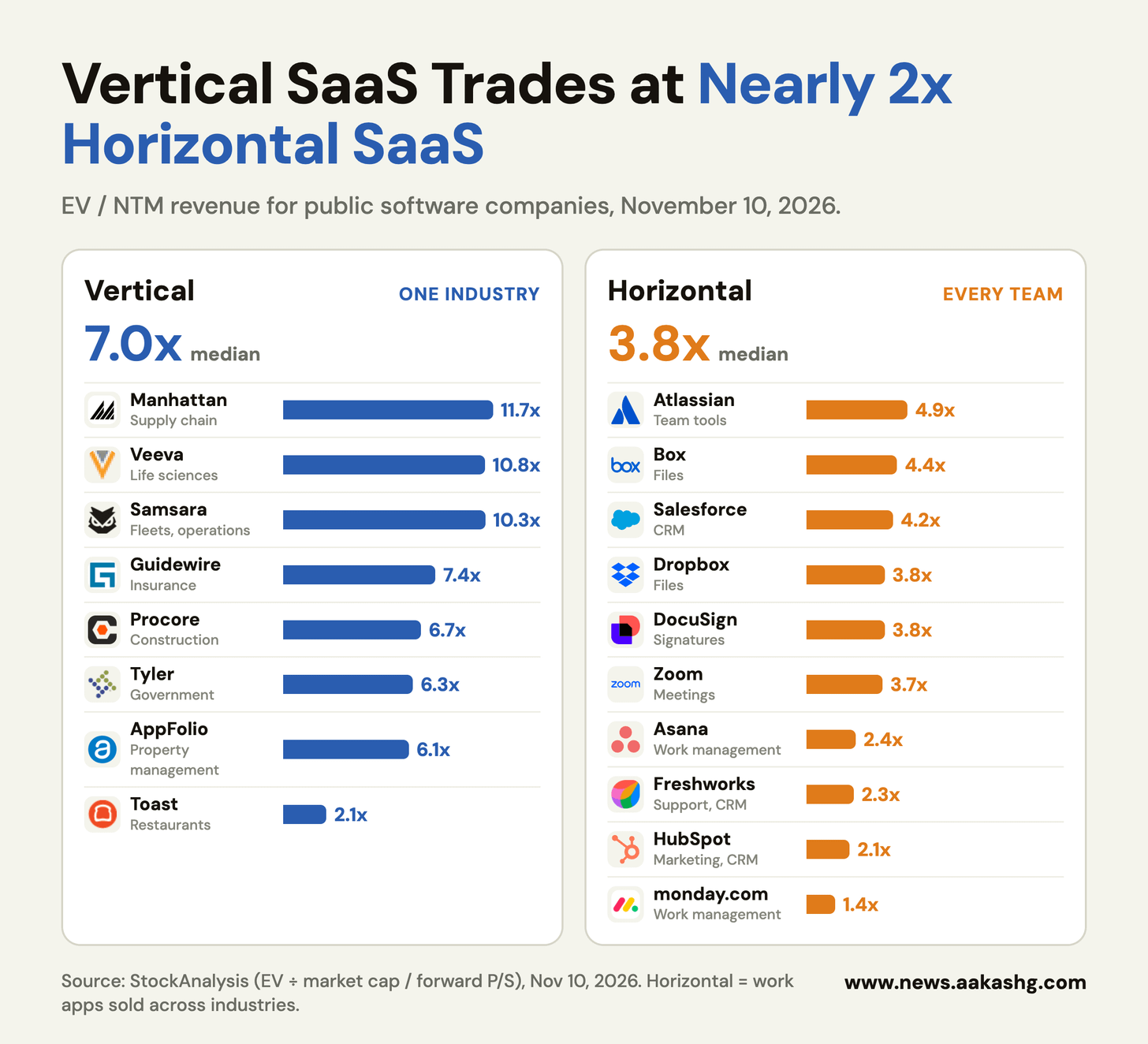
Linda sees the world splitting in two. The frontier labs are going really broad, and she says Codex and Claude Code make her "a million times more productive." But broad leaves room for narrow, and the market pays for it:
Her analogy is models. Teams train their own mini models for narrow jobs because they work better:
"You don't need a model that knows Washington was our first president."
PMs, developers and designers all used Webflow. When Webflow looked at what they did with it, it was marketing work: web developers for the marketing team, growth PMs, product marketers updating content.
So the ICP became marketing teams at larger companies, with dozens to hundreds of people working on one site. Linda called going all in "terrifying." Her rule is to build for the ICP first and let adjacent users follow.
It also changes who comes after you:
"As a vertical solution, I do think it puts us in a space where I don't see a frontier lab directly coming after us. Maybe they will eventually."
Veeva made the same bet on life sciences and still trades above 10x NTM revenue. To find your own buyer, run her test:
Pull usage by the job people do with the product.
Put job titles next to each job.
If many titles do the same job, that job is your buyer.
List what the labs won't build for that buyer, like governance and collaboration.
Bet 3: Turn AI into your channel
Most SaaS companies treat ChatGPT as the competitor. Webflow treats it as the top of its funnel:
"Oftentimes we actually encourage a lot of people to use ChatGPT's site builder and then bring the site into Webflow and iterate from there."
Linda says it's something Webflow talks "a lot about with OpenAI and Anthropic." Webflow isn't alone:
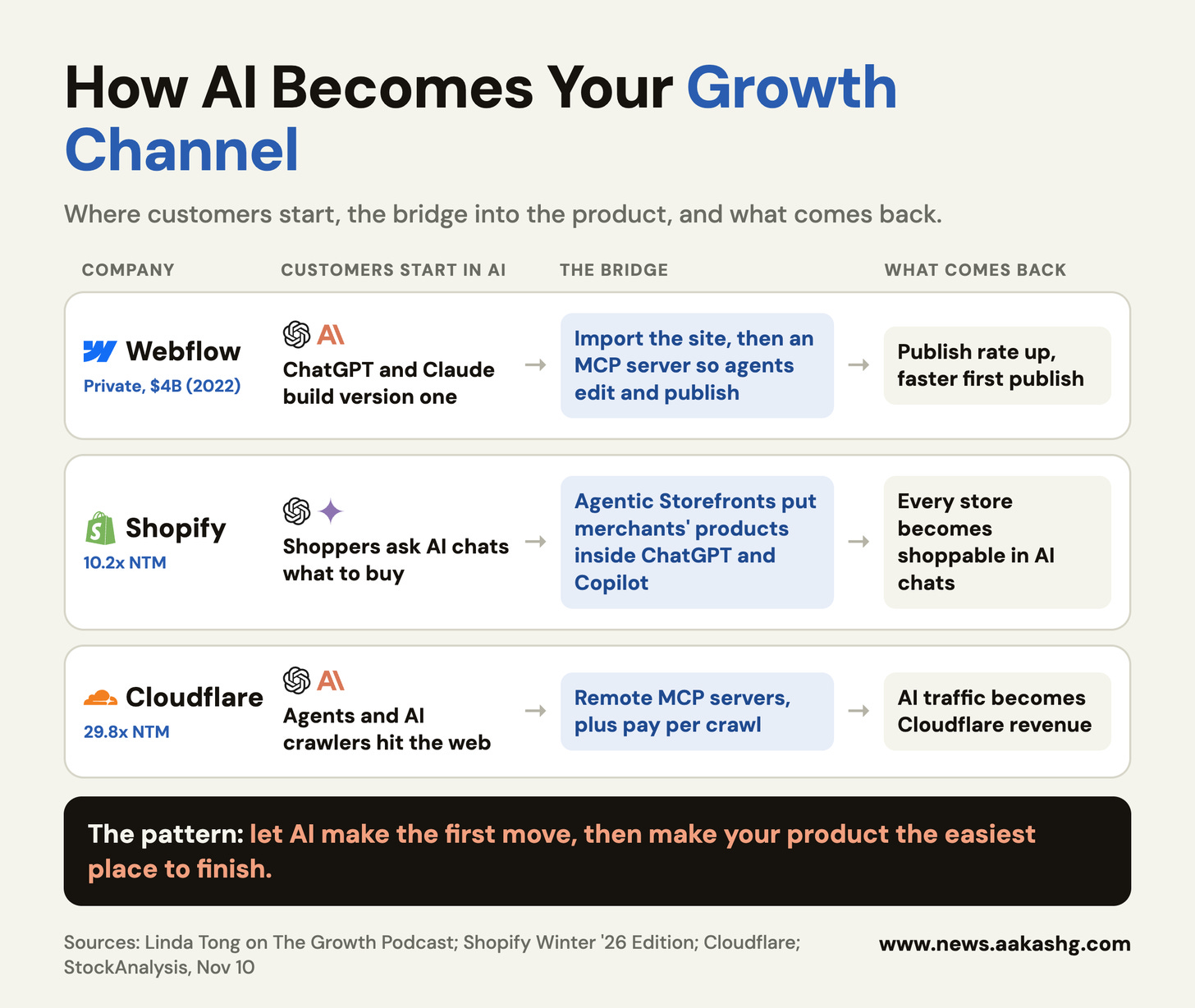
Step 2 is where the proof is. Webflow launched its MCP server last year, and Linda called the adoption "unheard of." The number she watches is publish rate: how often someone comes in, makes changes and publishes.
People publish more once they use MCP, and new customers reach their first publish faster.
Together AI's CPO, Charles Zedlewski, told me the same thing on our episode:
"At this point, for a lot of our products, agents are already the majority user."
Step 3 is Source, now in research preview. It plans a launch, builds the assets on brand from everything Webflow knows about the customer, gets approvals and publishes. Data alone, Linda says, is "this massive hoarder's yard"; the context around it is what makes agents useful.
3. Build the team to run the bets
None of these bets work with a 2021 product team. Linda remembers her first PM job at Google as specs and meetings, and when I was a senior PM, I probably spent 75% of my time on PRDs, status updates and email.
Webflow's team looks very different now (Webflow's CPO Rachel Wolan walked me through it last year). Here's how it works:
PRs first. PMs code the first prototype, and designers and engineers swarm on it while it's still rough.
Half-pizza teams. A funded product area is two or three engineers, a designer and a PM.
Behavior over output. Shipping 100 features against 25 means nothing if 80 of them are stupid, as Linda put it, which is what I call taste at speed.
More customer time. Her PMs are in the field and in Slack with early testers more than ever.
Freshworks made the same switch and cut releases from 6 months to 2 weeks. I've mapped the whole model in the AI product operating model, and you can run it from a Company OS.
Every PM at Webflow is an AI PM
Webflow does not offer an AI PM title. Because Linda believes that every PM has to be an AI PM now by default.
Every Webflow job description already asks how AI-pilled you are like how JDs used to ask typing speed until it became a baseline.
What the interview tests
Here's the full loop, in her words:
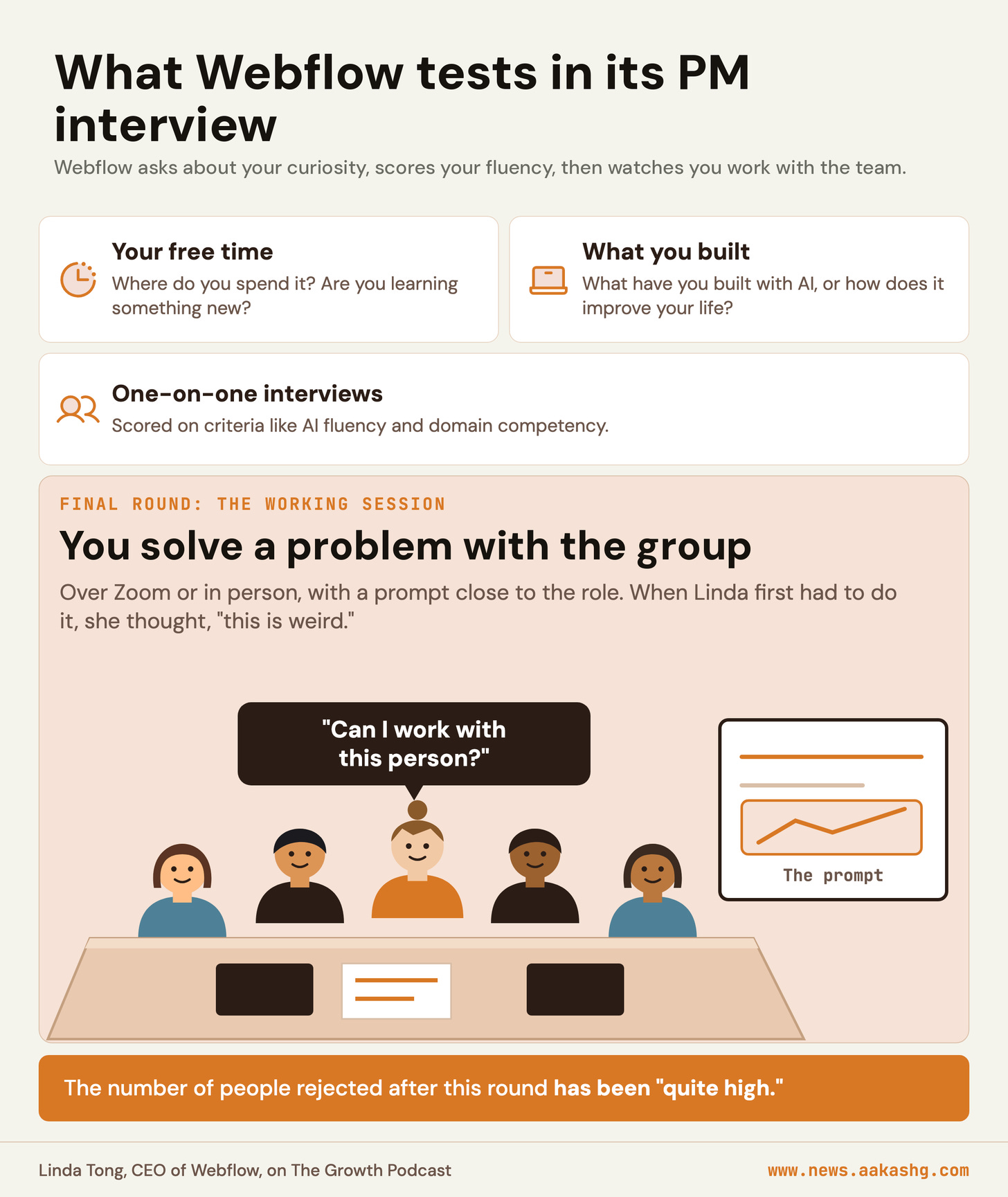
The interview tests for it directly. The best read on curiosity is what you do with your free time.
Webflow also asks what you’ve built with AI or how you use it to improve your life.
No AI PM experience yet?
If you’ve been stuck needing AI PM experience to get an AI PM job, you can build that experience on your own. Give them something to look at like a PM portfolio you vibe-coded or a GitHub.
Going after a role like this? My Land a PM Job cohort starts November 23.
I give you six 1:1 coaching sessions with Bart, Prasad and me, plus live negotiation help. That in and of itself makes it worth the cost.
Plus, I teach you how to apply to jobs with AI and connect with people automatically every day. Join the cohort here.
Where to find Linda Tong online
Liked today’s edition? Take a moment to follow us on Apple, Spotify, and YouTube! Your support helps me and the team bring you more high-quality resources for free :)


