
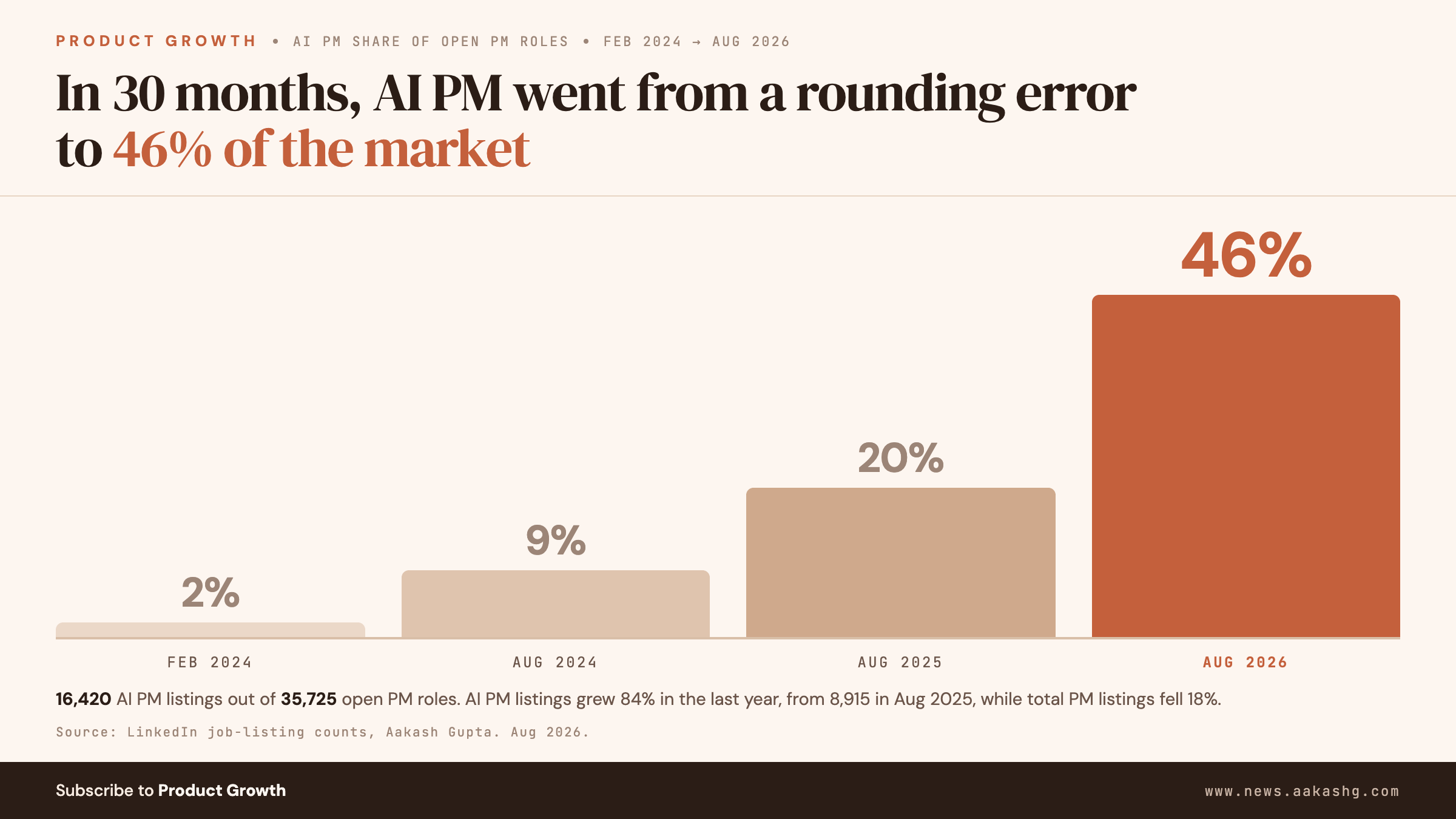
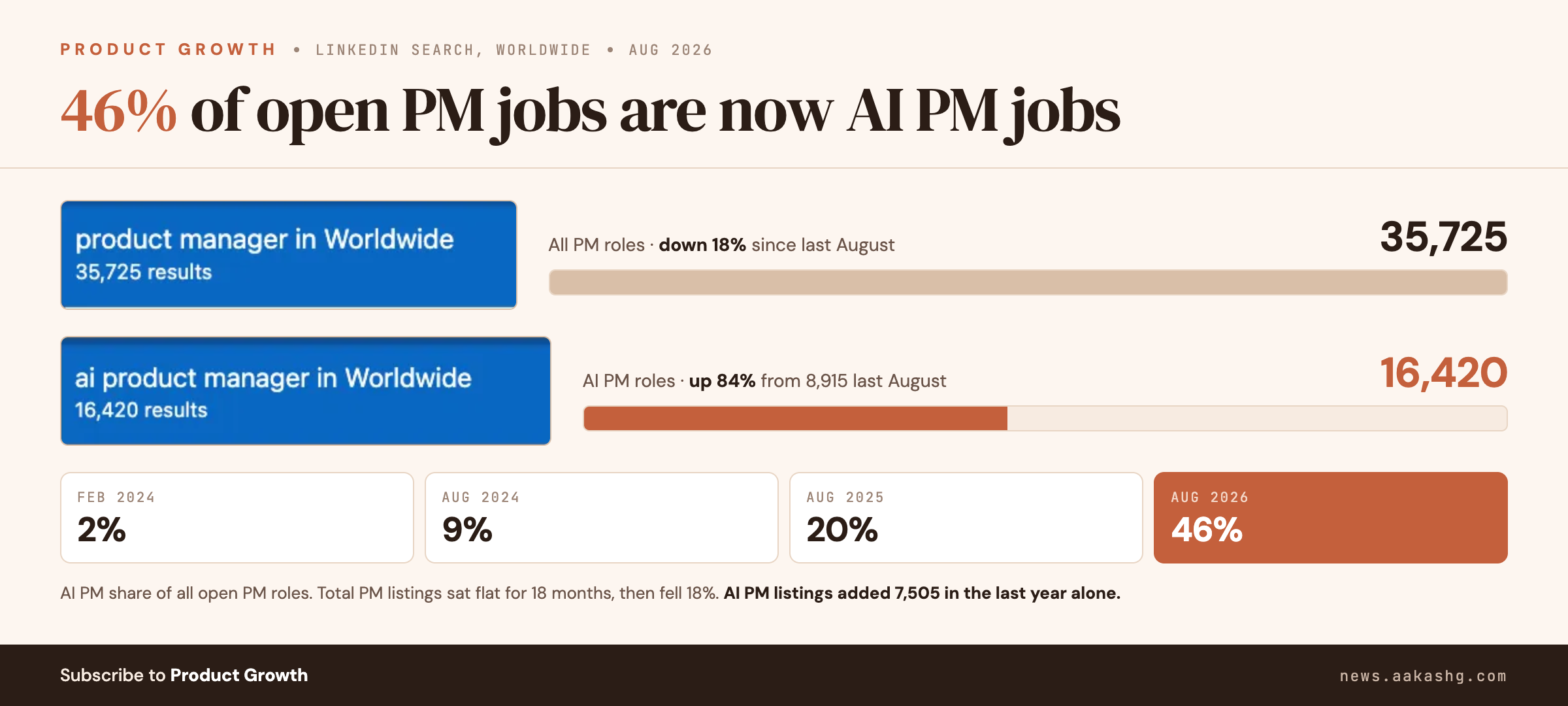
There are 35,725 product manager job listings on LinkedIn right now.
Meanwhile, there are 16,420 AI product manager job listings.
I’ve been pinging these searches for the last few years. And the results are astounding.
In February 2024, AI PM was 2% of open PM jobs. Today it’s 46%.
And what are hiring managers consistently looking for in these roles?
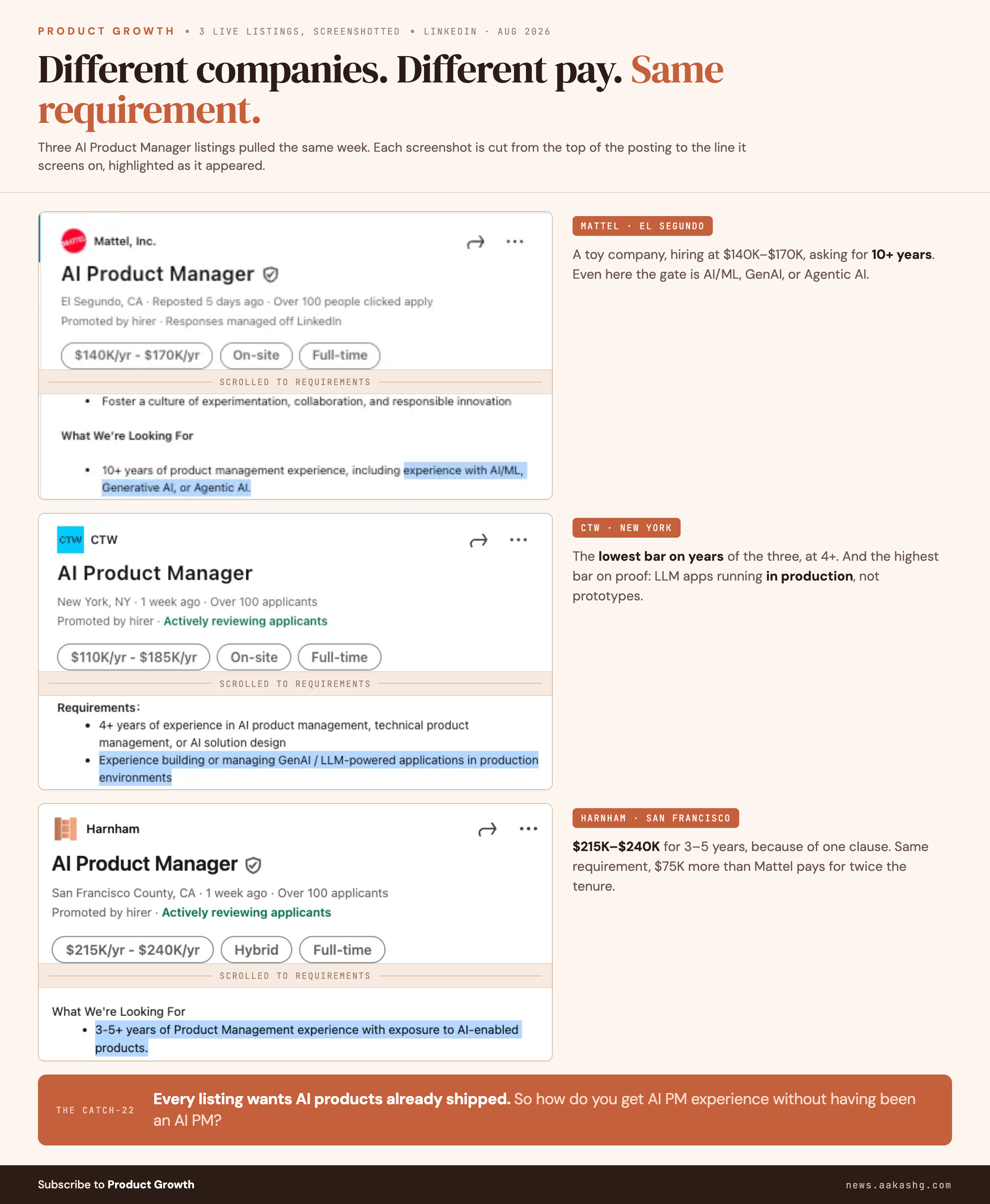
Experience having shipped AI products to production at scale.
But if you’re trying to break in, you face a catch-22:
How do you get AI PM experience without having been an AI PM?
That’s the subject of today’s post.
Introducing Nancy Li
Believe it or not, I resisted writing much about AI well into 2024. It was then that I published How to Become an AI PM with No Experience with Dr. Nancy Li. The post’s outperformance helped set off this newsletter’s heavier percentage focus on AI.
Now, Nancy is back. And today she’s sharing real case studies of how her students have nabbed AI PM roles without AI PM experience. You see, she runs the PM Accelerator and does this for a living (with free webinars and a paid cohort).
So she’s just the right person to help.
Today’s Roadmap
We’ve split the piece into the following 5 topics:
Why you need synthetic experience
Real case studies of synthetic experience
The AI PM synthetic experience pyramid
How to showcase synthetic PM experience
Resume
LinkedIn
Portfolio
The AI PM Synthetic Experience Pack
1. Why you need synthetic experience
A few factors are conspiring to make synthetic AI PM experience so important. The first starts at a market, or economics, level.
The competition is tougher than ever
In the same span that AI PM went from 2% to 46% of open PM jobs, PM jobs themselves fell 18%.
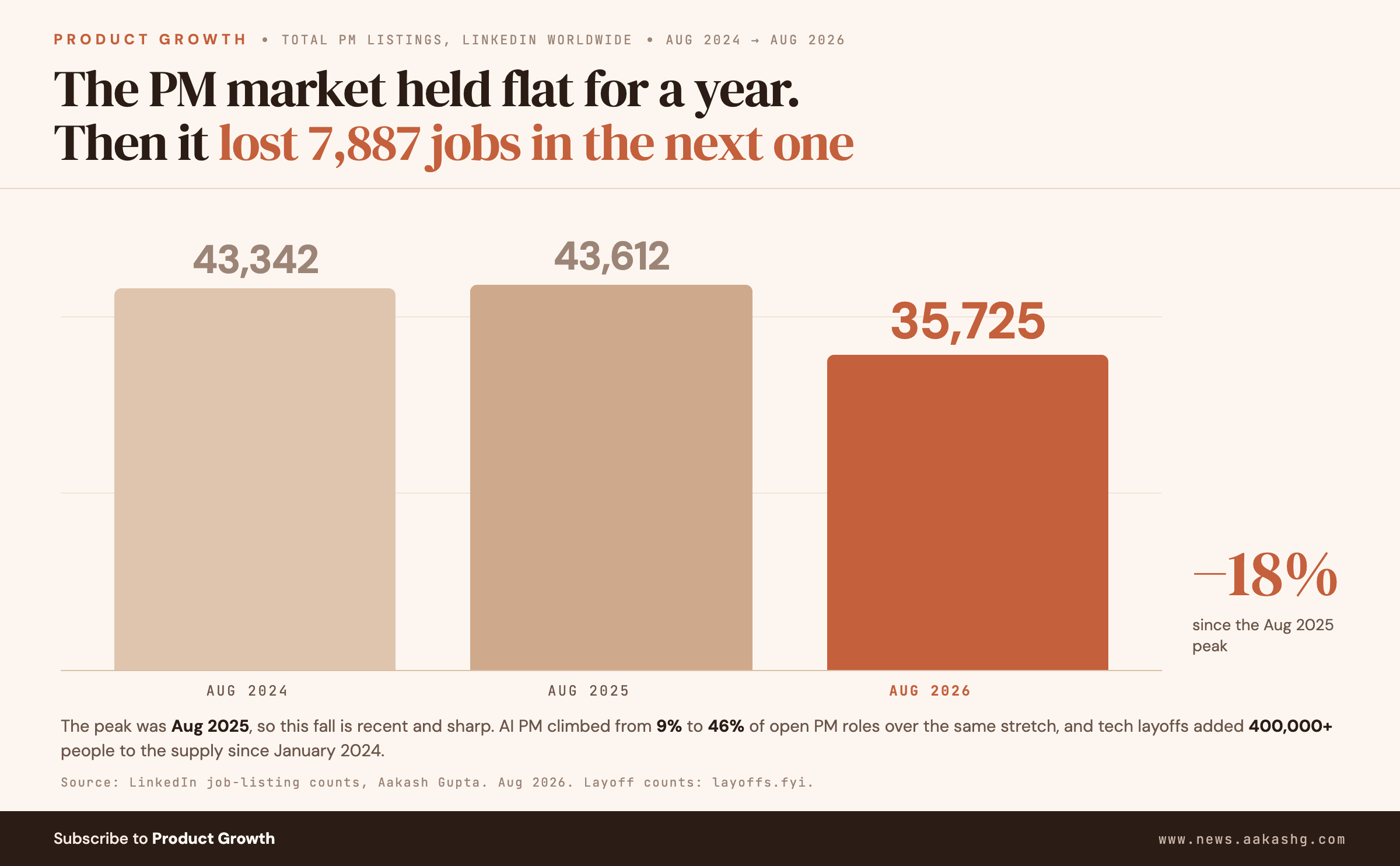
That’s 7,887 PM roles gone since the August 2025 peak. And then if you look inside that “flat” year. AI PM listings more than doubled (+120%) while non AI-PM listings shrank.
The PM Market overall has gone down while the AI PM market has exploded.
I’ve been tracking this shift for a while. In The State of AI Product Management last year, I used different data, Live Data rather than LinkedIn, to come to similar conclusions.
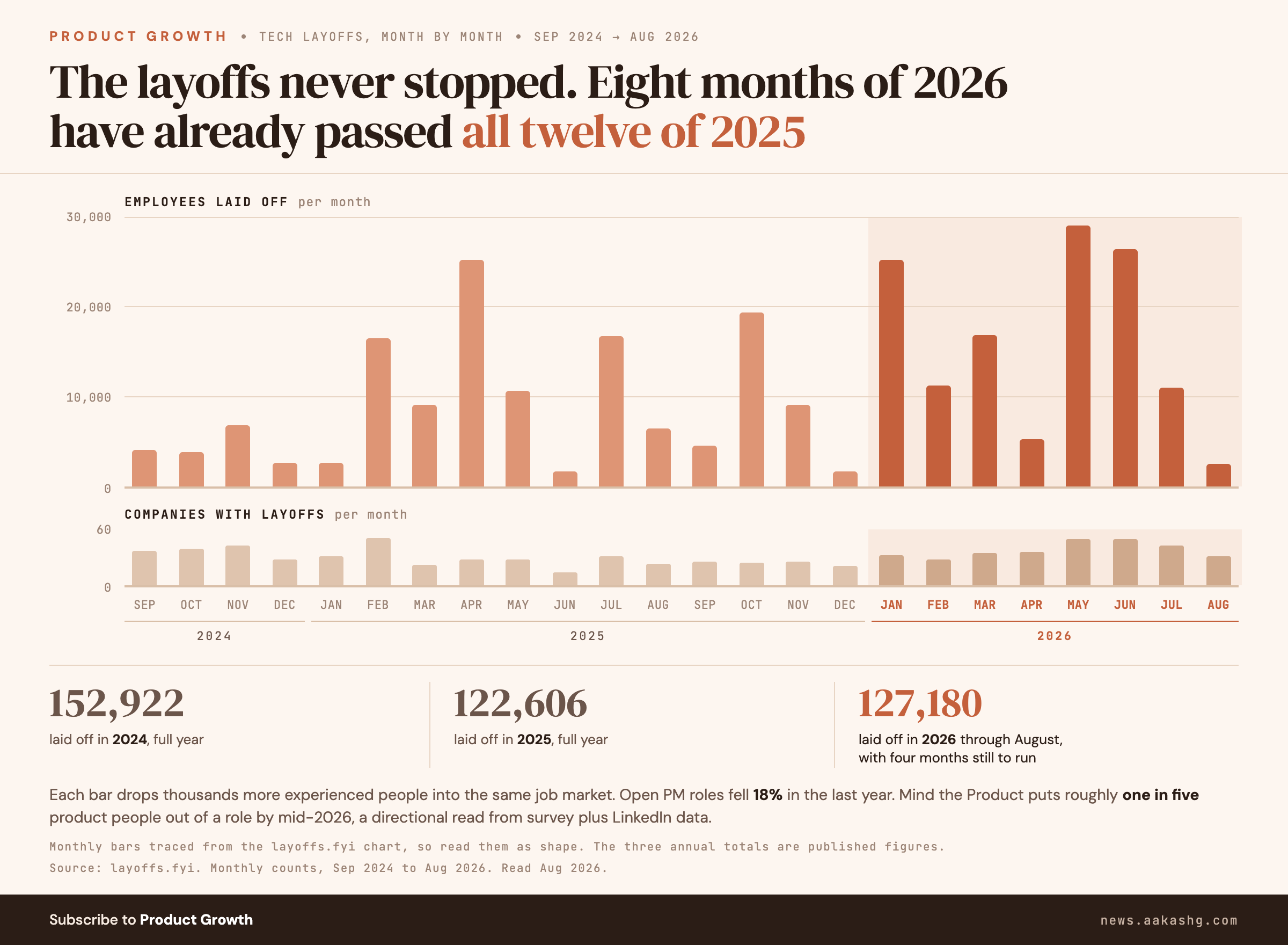
What’s compounding the mess from a candidate point of view is the supply side. Layoffs keep feeding the supply:
Per layoffs.fyi, 127,180 tech employees have been laid off this year - most recently, 200 at Apple.
Mind the Product estimates roughly one in five product people out of a role by mid-2026 (survey + LinkedIn estimate, so treat it as directional).
And it has been running like this for two straight years:
So there’s fewer seats. And more people are chasing them.
This has made it a “hiring manager’s market.”
Basically, the power of hiring managers is greater than job seekers’ right now. That’s not always the case. 2021 was the opposite.
And the seats that remain are increasingly AI seats:
Experience is a form of de-risking
Put yourself in the hiring manager’s shoes now. Why do they want prior AI experience so badly?
It’s about de-risking. As product leaders, we’re taught to de-risk product risk, de-risk business risk, and, in the case of an experienced PM, de-risk team risk.
If you can prove that you’ve had experience shipping AI features that work at scale, they assume you get it. You know how to work with AI engineers and researchers. You can write great evals. You won’t be surprised by working with product marketing to get the launch to go viral on X.
From the hiring manager’s chair, “has done this before” is an insurance policy. And right now, they can afford to demand it.
The 113-listing test
I worked with Claude to pull 113 AI PM listings off LinkedIn. Then I classified each of them by hand based on their stated requirements:
Here’s what I learned:
69% of AI PM listings asked for prior AI or ML experience outright. Another 19% asked that you be familiar with it. Only 11% of listings put no AI bar on the candidate at all.
You can call that seven in ten. Here’s what my process looked like to identify those:
I classified conservatively. But 40 of the rows were judgment calls. A softer reading might put the number at 55%. Either way, the majority of the market wants proof.
A few more things I learned from the analysis:
You don’t need AI in the title to demand AI PM experience. Generic “Product Manager” titled listings demanded AI experience almost as often as listings titled “AI Product Manager” (66% vs 70%).
“Production” is rarer than you fear. Only 14 of 113 listings (about one in eight) demanded AI experience specifically in production or at scale. The other listings that ask for AI experience leave the venue open.
That gap is exactly where synthetic experience lives.
The ask is for senior on paper, junior on AI. The median listing wants 5 years of product management experience. But when a listing separates PM years from AI years, the AI slice shrinks fast:
9fin wants 5+ years of PM with 2+ on ML or GenAI
Deloitte wants 10+ years with 1+ year of GenAI work
Goodera wants 2-4 years with 1-2 shipping AI.
The market’s real ask is one or two years of AI proof on top of ordinary PM tenure. That much is buildable.
What “synthetic experience” means
From here on out, we’ll refer to “synthetic experience” to mean AI product work you manufacture for yourself, ahead of any employer giving you the title.
You build something real, get it used, and document the product decisions along the way. Then it goes on your resume, portfolio, and LinkedIn as work.
Because it is work.
I’ve taught the same play for breaking into PM itself with no experience for years. This is that play, pointed at AI.
It is emphatically NOT fabricated experience.
Fabricated experience collapses at the first technical screen, or the first time someone asks you about your eval set. From here on out, we’re focused on producing artifacts a hiring manager can click, question you about, and verify.
Let’s have a look at some examples.
2. Real case studies of synthetic experience
Nancy and I have run the synthetic experience playbook with many candidates. Here, we show you the real results.
Case Study 1: Brian Luc
Brian spent roughly 15 years in hardware engineering at Apple. He started as a hardware engineer and then moved into a Senior Program Manager role.
He didn’t have a software product manager title, or a title with AI.
So he built Renosmarter.ai:
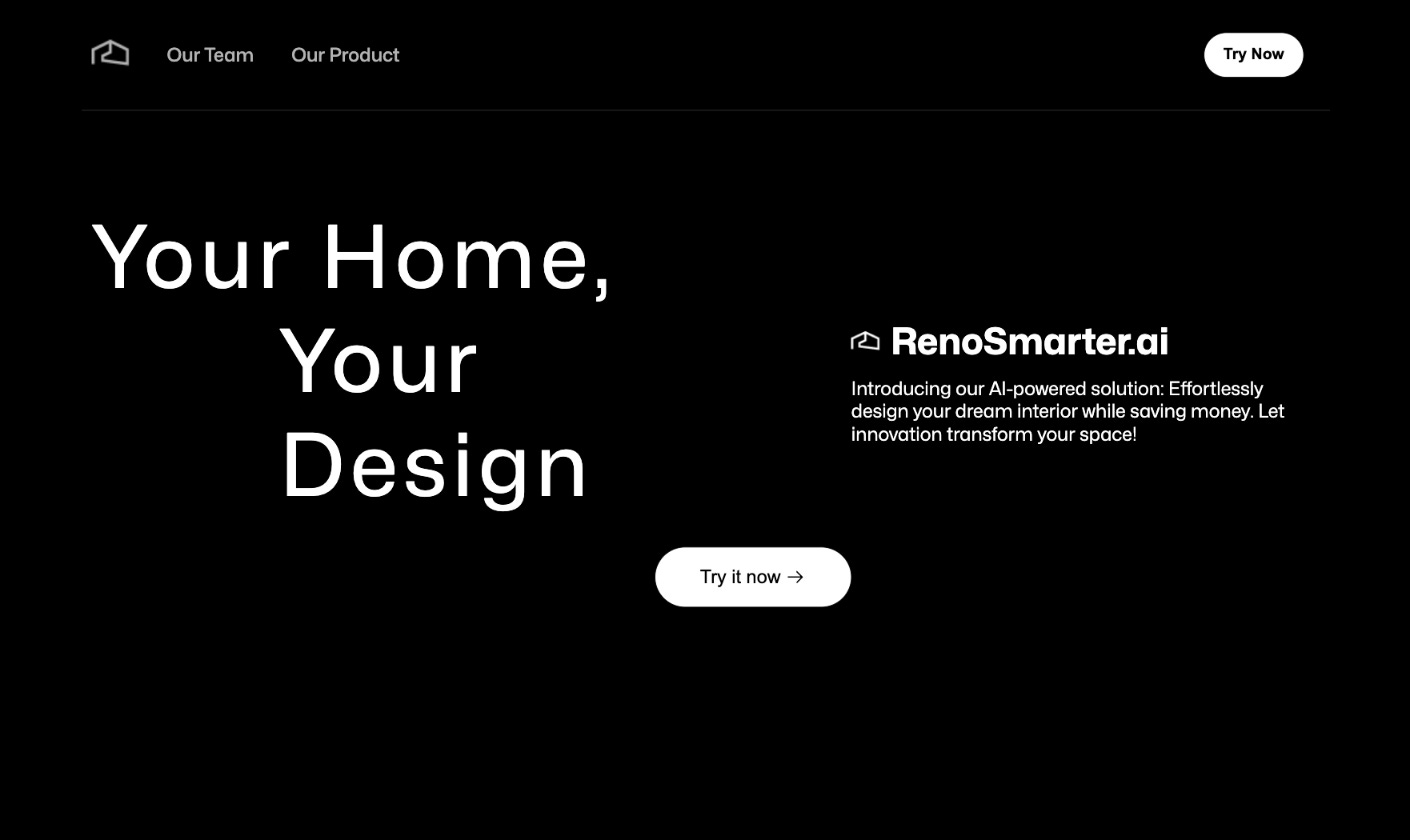
He used that to update his LinkedIn headline for his AI PM experience. He also posted about the project on LinkedIn. 5 months later, he was an AI PM at Cisco:
AI Product Manager @ Cisco | Building Applied AI Products That Save Time & Reduce Costs | Multimodal AI, RAG, LLM Orchestration | ex-Apple
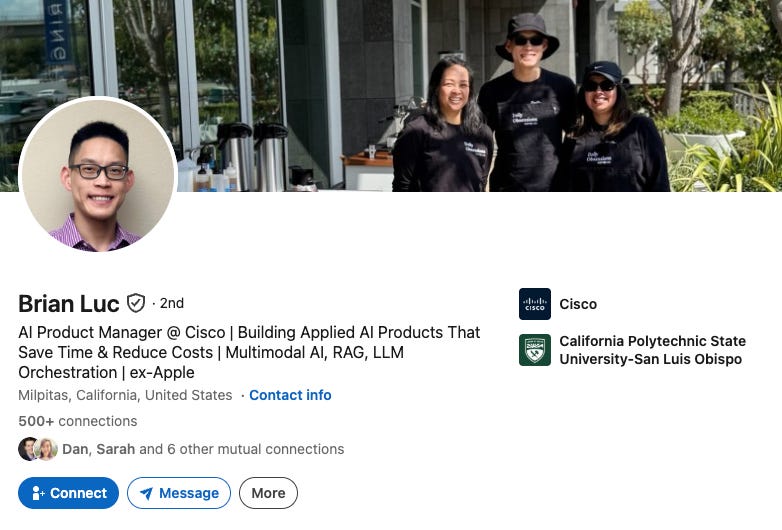
He managed to use the synthetic experience to land the AI PM role at a ~$444B market cap company.
Case Study 2: Katherine Sao
Katherine is the case for everyone reading this post after a layoff.
🔒 The rest of this post is for paid subscribers only: 3 more case studies, the pyramid of what type of experience helps, and step by step how to show case it.
Plus, The AI PM Synthetic Experience Pack, with checklist and Claude skills to speed up your journey.