
3 months ago, Shubham Saboo was in Dev Rel. Now, he’s a senior AI PM at Google.
This is what a Senior AI PM at Google’s Github looks like:
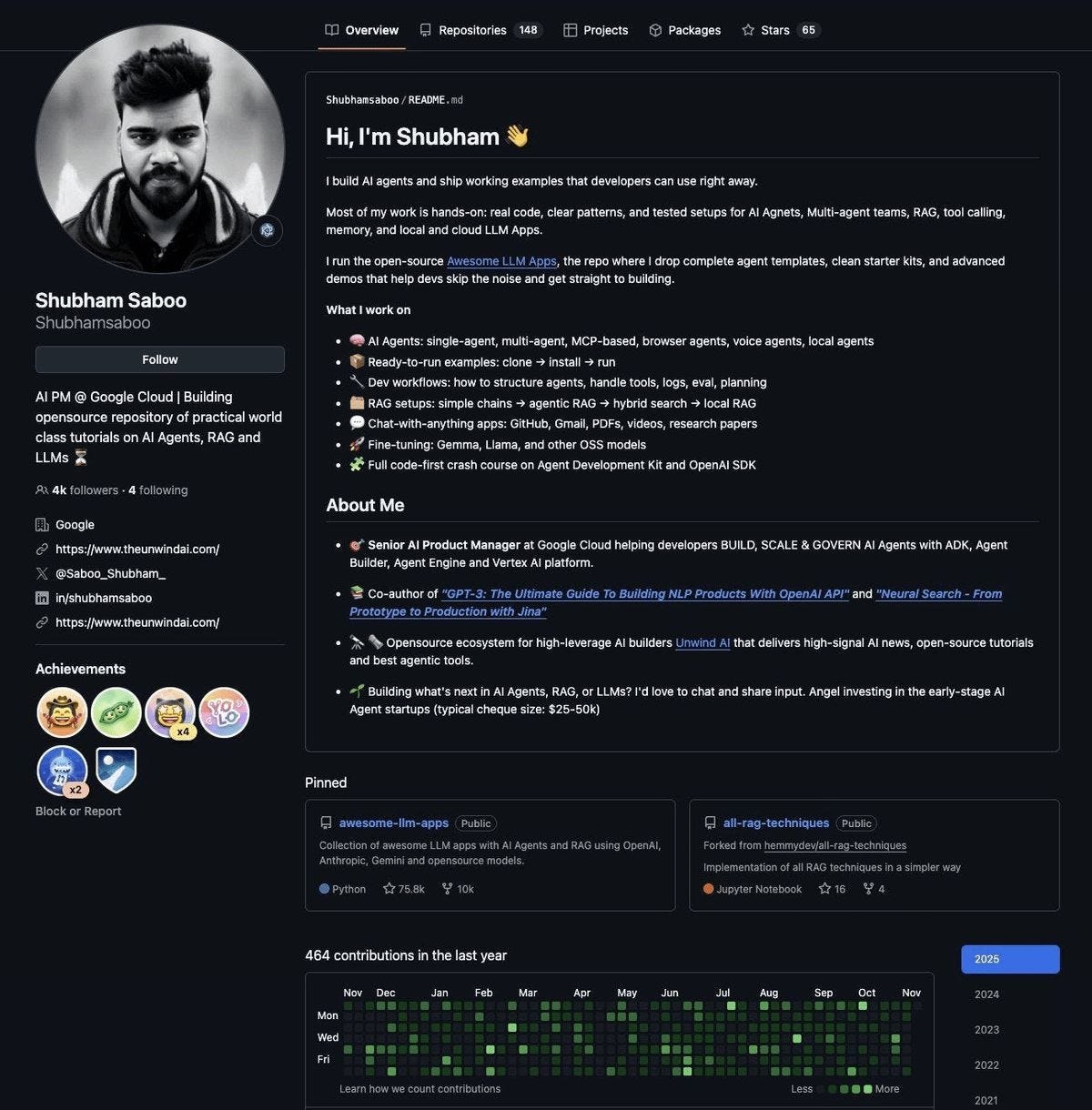
If you want to break into AI PM or a technical PM role, you definitely want a Github. If you want to break into any PM role, you should strongly consider one.
Today’s post is how to build one that stands out.
The GitHub Reality Check
All PM candidates have resumes. 17% have a portfolio. Only 24% have a Github.
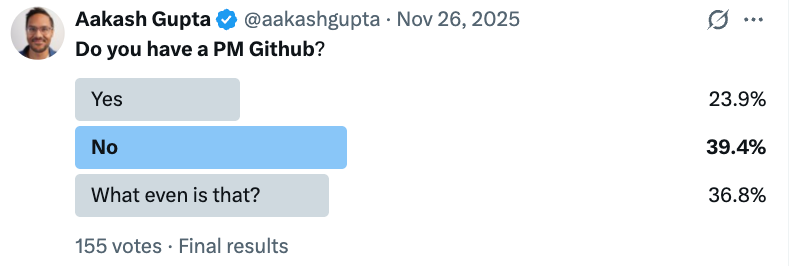
One interpretation might be: these aren’t that important.
But here’s what hiring managers told me when I interviewed 10+ AI PMs leaders at top companies: if there’s a Github linked, they will check it.
You see, a strong GitHub signals three things that certificates and resumes can’t:
You actually build things (not just talk about building)
You understand how technical teams work
You can navigate the tools engineers use daily
Shubham’s GitHub helped him transition from Dev Rel to Senior AI PM at Google Cloud.
But There Are No Resources
There’s literally not a single guide on the web on how PMs should put together their own Githubs:
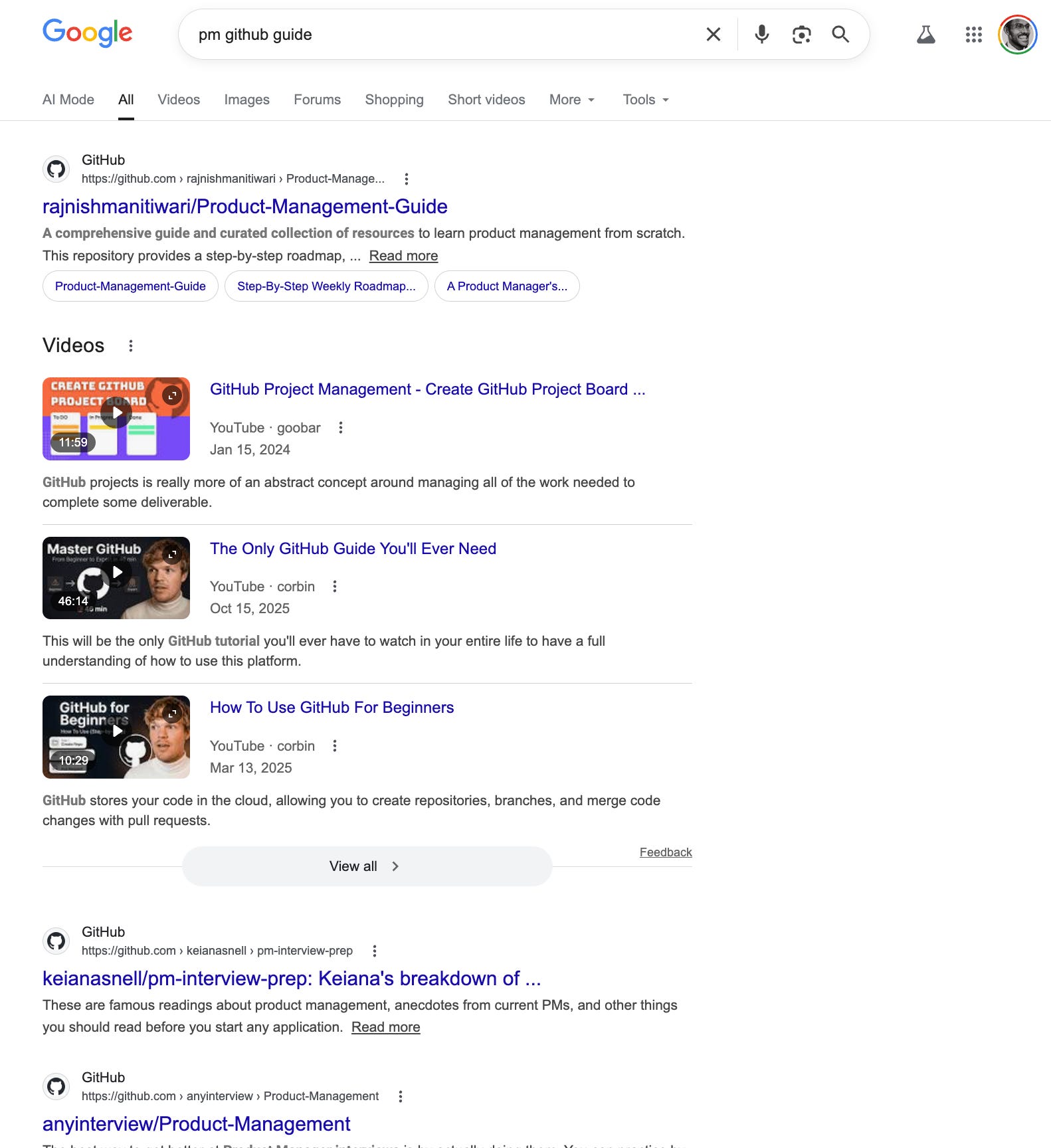
So I had to build one for you.
Today’s Post
I’ve put together the web’s first guide on PM Githubs:
What is Github and Why do Devs Use It
What Makes Shubham’s Github Work
How to Create Your Github
What to Avoid
1. What is Github and Why do Devs Use It
Github is like the Google Docs for software projects.
When a developer writes code, they save it to GitHub. When another developer wants to improve that code, they can see the full history of changes, suggest edits, and track what worked and what didn’t.
Just like Google Docs for PMs (except even better with history).
And just like every PM writes docs, but not all use Google Docs, every developer uses Git, but not every developer uses Github.
There are alternatives like GitLab and Bitbucket. But they all run on Git underneath.
Git provides two things professional developers can’t work without:
Version Control: Every change is saved. If something breaks, developers can revert to any previous version. They never lose work.
Collaboration: Multiple people can work on the same codebase without overwriting each other’s changes. GitHub tracks who changed what and when.
Github adds a third benefit on top: it’s a public portfolio. Open source projects live on GitHub. Developers showcase their work, contribute to popular projects, and build reputation through their profile.
For developers, GitHub is standard infrastructure. For PMs, it’s optional. That’s exactly why it matters.
When you have a GitHub profile as a PM, you signal something hiring managers rarely see: you build things. You understand the tools your engineering team uses daily. You’ve crossed the line from talking about products to shipping them.
Most PMs list skills on their resume. PMs with GitHub profiles prove those skills with working code.
That proof is what opens doors.
2. What Makes Shubham’s Github Work
Normally, the transition from DevRel to PM is almost impossible. Especially when moving from one company to another. Usually, my advice is to move internally.
How did Shubham manage to do it with an external switch? And how can you replicate it?
For Shubham, his Github marketed him.
Google reached out to him because of it (and the marketing he does of it on X). The best Githubs do that. They act as inbound lead magnets for recruiters.
And when companies reach out to you, you are much more likely to go from interview to offer.
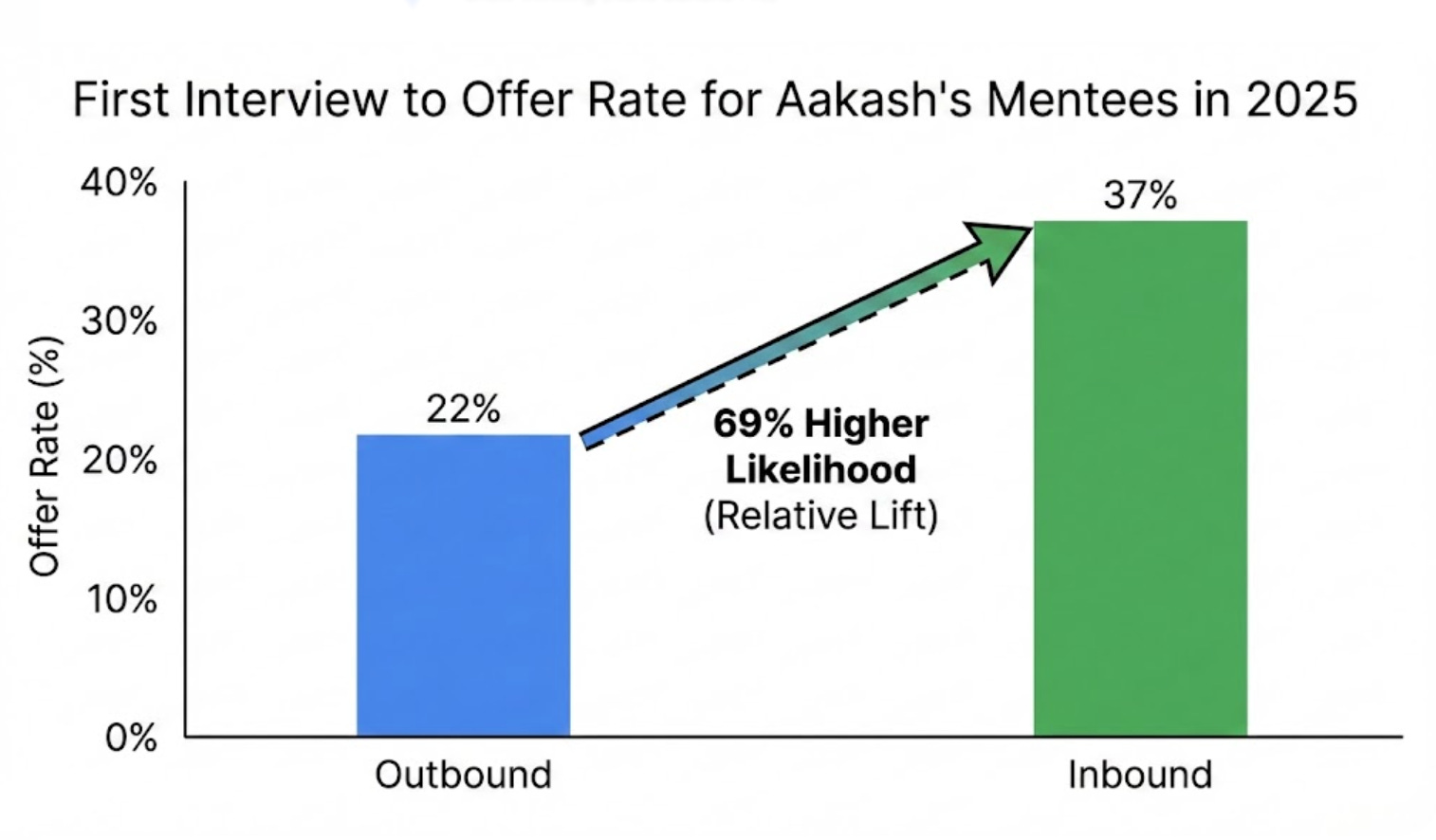
But even if your Github is not a lead magnet, it’s a big differentiator atop your resume:
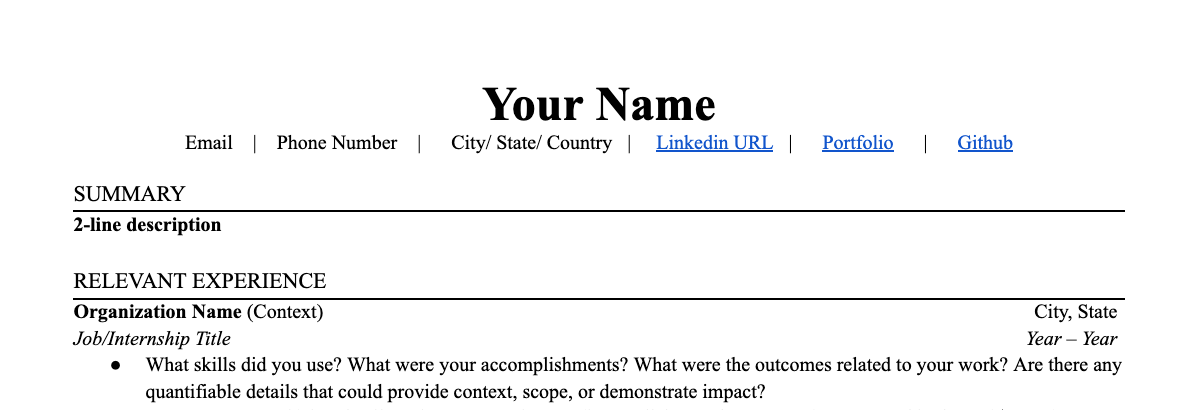
The latest PMs I placed at OpenAI, Anthropic, Meta AI all had Githubs. They didn’t have 76K star repositories, either. But the Githubs still helped the PMs stand out.
Of course, you can’t have a bad github. That’s an anti-signal! So let’s help you create a Github that actually helps, and give you the roadmap to one that even markets you, like Shubham’s.
What paid subscribers get below:
The 6 elements that made Shubham’s GitHub get him hired at Google
Step-by-step guide to building your PM GitHub from zero (with Cursor/Claude Code)
The PM GitHub Starter Kit: templates, prompts, and a 3-week checklist (fork and go)
50 GitHub project ideas mapped to PM skills (infographic)
The 6 mistakes I see candidates make that kill their chances