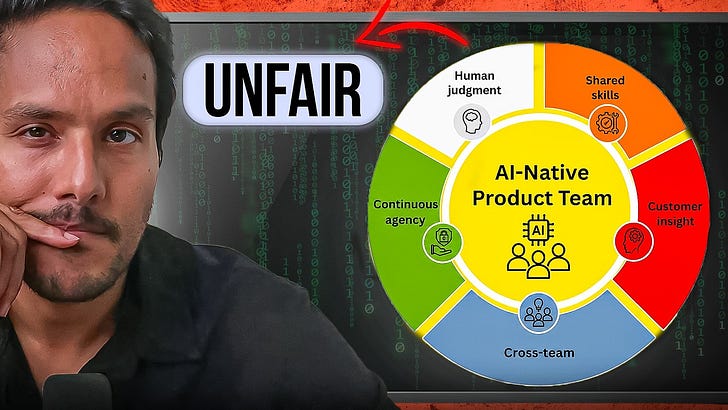
Check out the conversation on Apple, Spotify and YouTube.
Brought to you by
Customer.io - Send smarter messages using your product data
Ariso - The AI operating partner for every manager and team
Product Faculty - Get $150 off their #1 AI Builder Fellowship. Code AAKASH150
Land PM Job - Join me for Cohort 5 starting November 16th
Amplitude - Custom agents that monitor your funnel and file the ticket
Today’s Episode
Freshworks is a $3.4B giant of SaaS. They’ve been around since 2010. They have over 75,000 customers and 4,000 employees. Their 2026 revenue will be $960M.
They’re a colossus.
When Srini Raghavan joined them as Chief Product Officer, they had a 6 month release process. Under his tenure, they moved to a 2 week release cycle.
They embraced a new way of working powered by AI.
In today’s episode, he breaks down everything:
The AI PDLC they embraced
The AI Harness they created in Cursor, so it can run on any models
How the PM role shifted to Product Builder
If you’re a product leader, this is a great example of how to become AI-native.
If you’re a PM, it’s a great harness (using Grok models!) to learn from.
I hope you enjoy it as much as I did:
I’ve written up the key takeaways for newsletter subscribers as well.
1. The AI PDLC they Embraced
How do you go from shipping every 6 months to every 2 weeks?
It’s not about becoming AI first! Most teams try that: they open Cursor or Figma Make and start prompting.
Srini made the point that it actually all begins with being Data First:
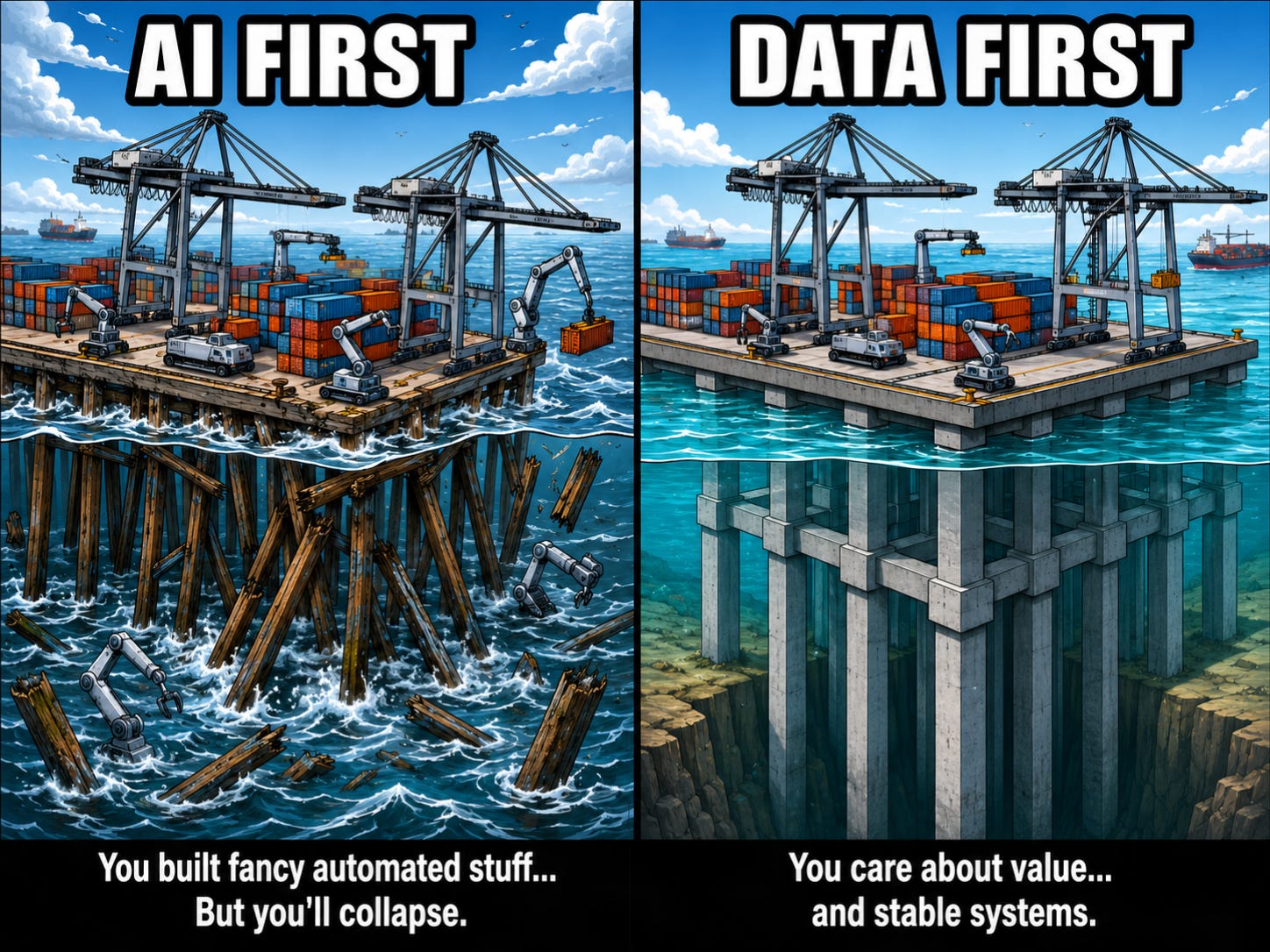
When you’re data first, you create the right foundation to actually be AI first. At Freshworks scale, with 300 million end users, you can’t afford a hallucination.
For Freshworks, that was three things:
A design system structured so agents can parse it
Coding standards written down explicitly
A single repo as the source of truth
They wrapped that all into a system they call Prism. It’s a knowledge hub that knows the product and its dependencies inside out, plus a context hub that passes feature context between phases, and a central library of what they call AI builder artifacts. These are the skills, rules, commands, and agents that describe how Freshworks specifically builds.
The AI PDLC sits atop all of that. And it looks like this:
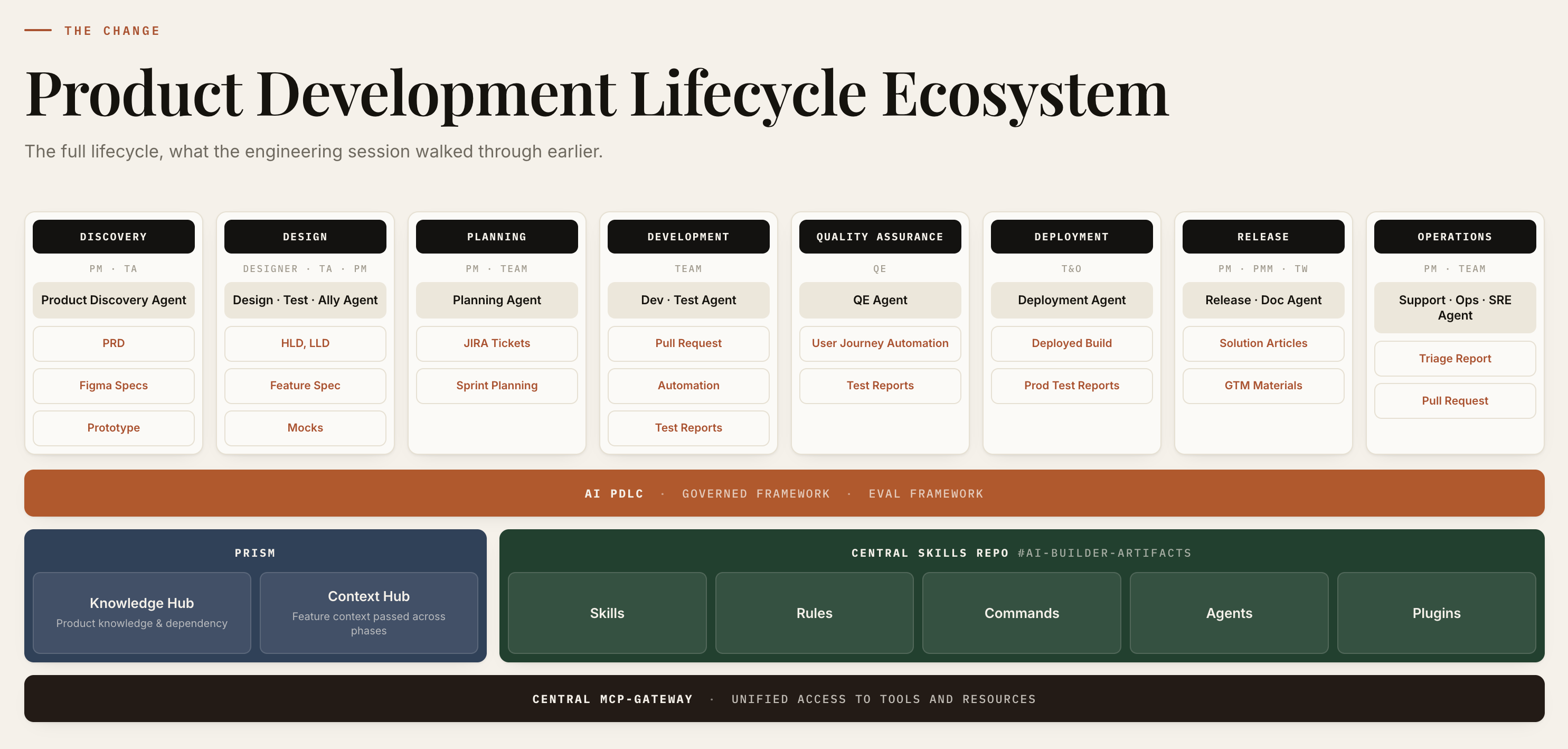
It’s the same lifecycle every SaaS company runs from discovery through release, with two changes. First, there’s a governed AI agent working inside each. Second, there’s an evals phase at the end.
And that’s how their release cycle went from 6 months to 2 weeks.
But even in the episode, there were some cracks. Figma Make skipped a few design system components. Srini noted that those are the places where humans still have a role.
2. The AI Harness in Cursor they created
I began in engineering. After 14 years of not touching code, now I’m spending a lot of time in Cursor.
Srini is now spending lots of time in Cursor, and he showed us. Everything starts with a slash command, /fw-innit. Here’s what that kicks off:
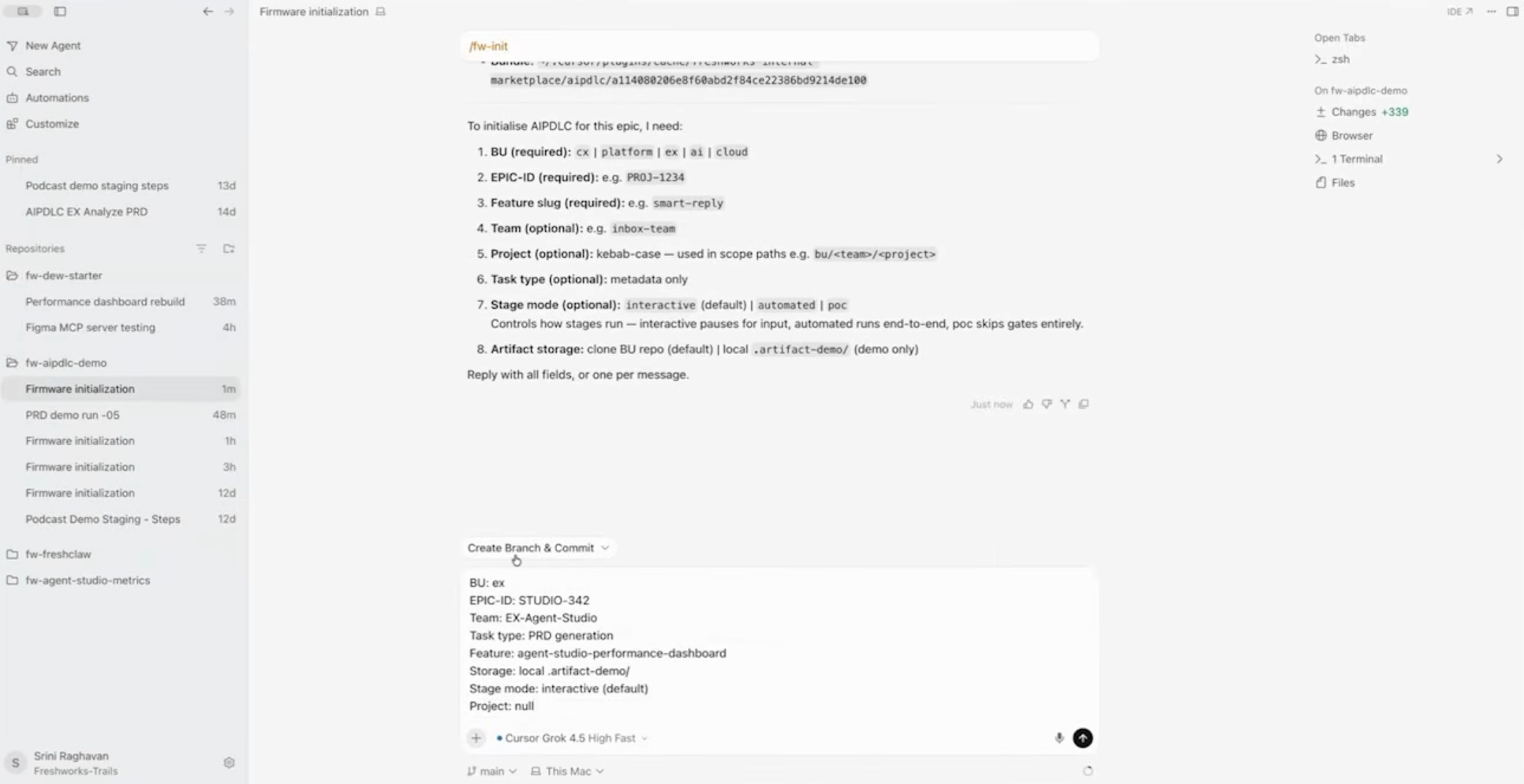
The harness asks for the business unit, Epic ID, and feature team. Then it runs 12 phases, all the way from idea brief through to prototyping and QA.
Srini did the whole demo on Grok models! He explained:
I used to use Claude, but Grok seems to be working really well, and it’s really really fast. Nothing takes more than 10-15 seconds.
And indeed, that’s what we found. If you really need speed, consider Grok.
He live built a performance dashboard for their new EX Agent Studio. After he described the feature in plain English, the agent came back with questions a good PM would ask:
How deep should the drill down go?
Who is the primary persona?
What does success look like in 6 months?
It then wrote its own SQL against Bel, their Databricks data lake with usage from all 75,000 customers. It assembled this into quantitative evidence in the PRD:
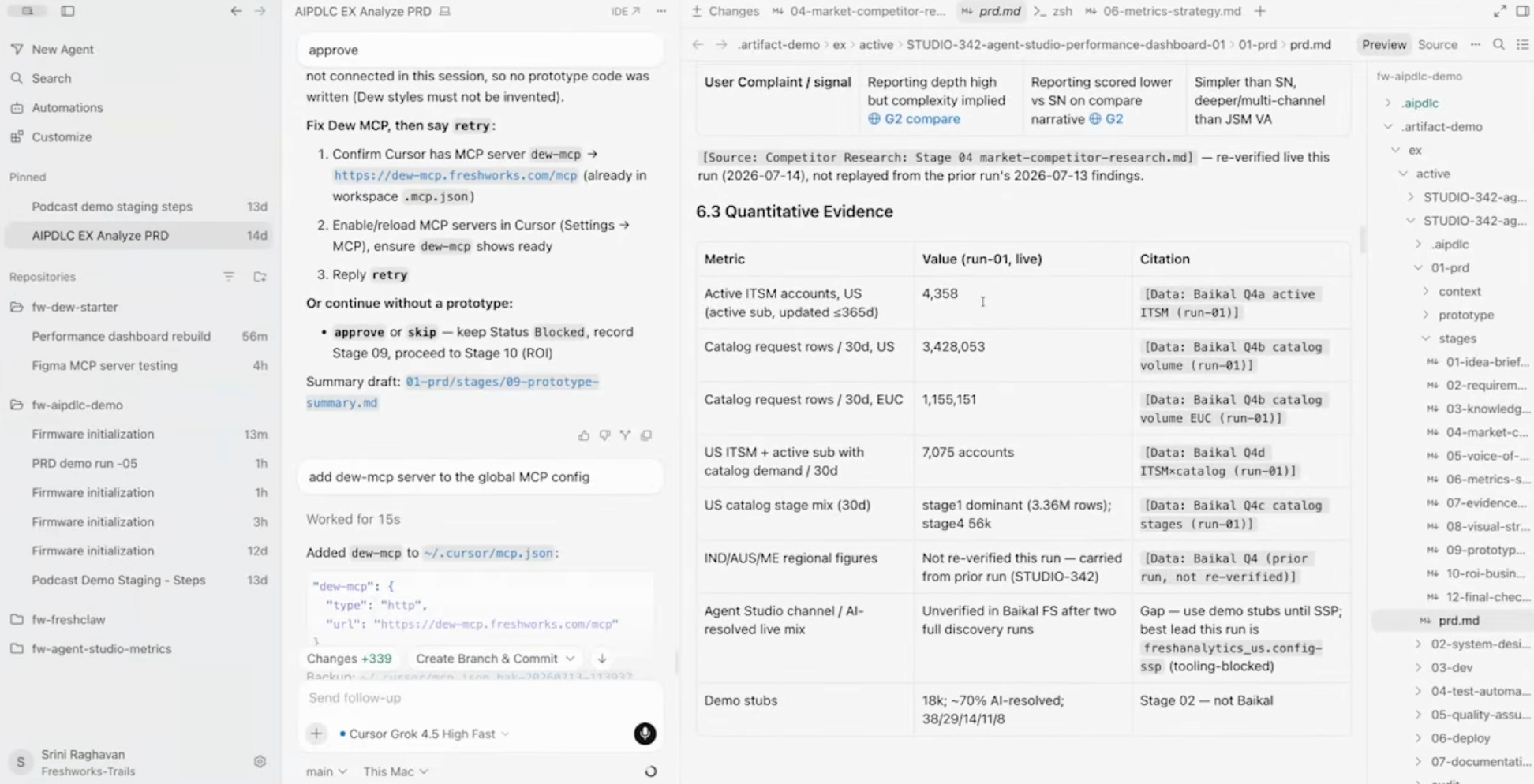
It looked across all 4,358 active ITSM accounts and showed its work.
At the end of the process is a step called CPO check which reviews the draft the way Srini would. His team named it after him.
From there, the PRD goes straight into Figma Make. Because of being data-first, they have a design system built into it. And after a few prompts we had a working prototype:
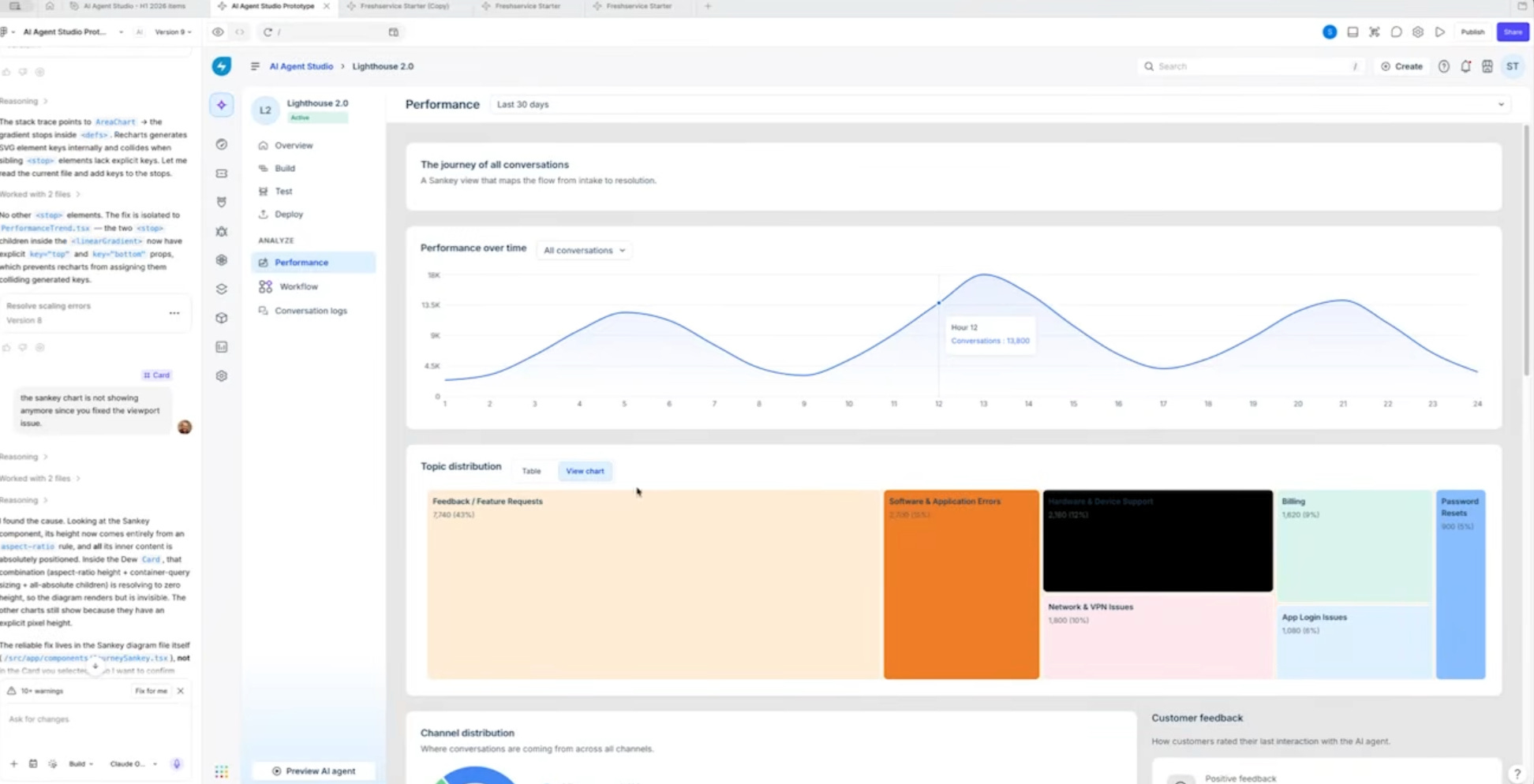
That’s the end-to-end process. No Claude Code or Codex. Just Cursor + any model.
3. How the PM role shifted to product builder
Which brings us back to where we started: what roles will execute work like this in the picture?
Srini manages 200+ people with titles like PM, UX researcher, and designer. His prediction is:
The titles Product Manager, Product Designer, and Engineer will go away in the next 5 years.
He didn’t say that to get clicks on Social Media. That’s how he’s running Freshworks. When he joined, Freshworks ran 1 PM and 1 designer for every 10 to 20 engineers.
Now, their new workflow is 1 PM to 1 engineer. Some teams have no dedicated designer at all.
Here’s why: those titles marked stations on an assembly line. The PM would write the PRD, hand it to design, and design would hand it to engineering. Now, like in section 2, one person can do the whole assembly line.
If you want to prepare for this future, I’ve put together the roadmap:
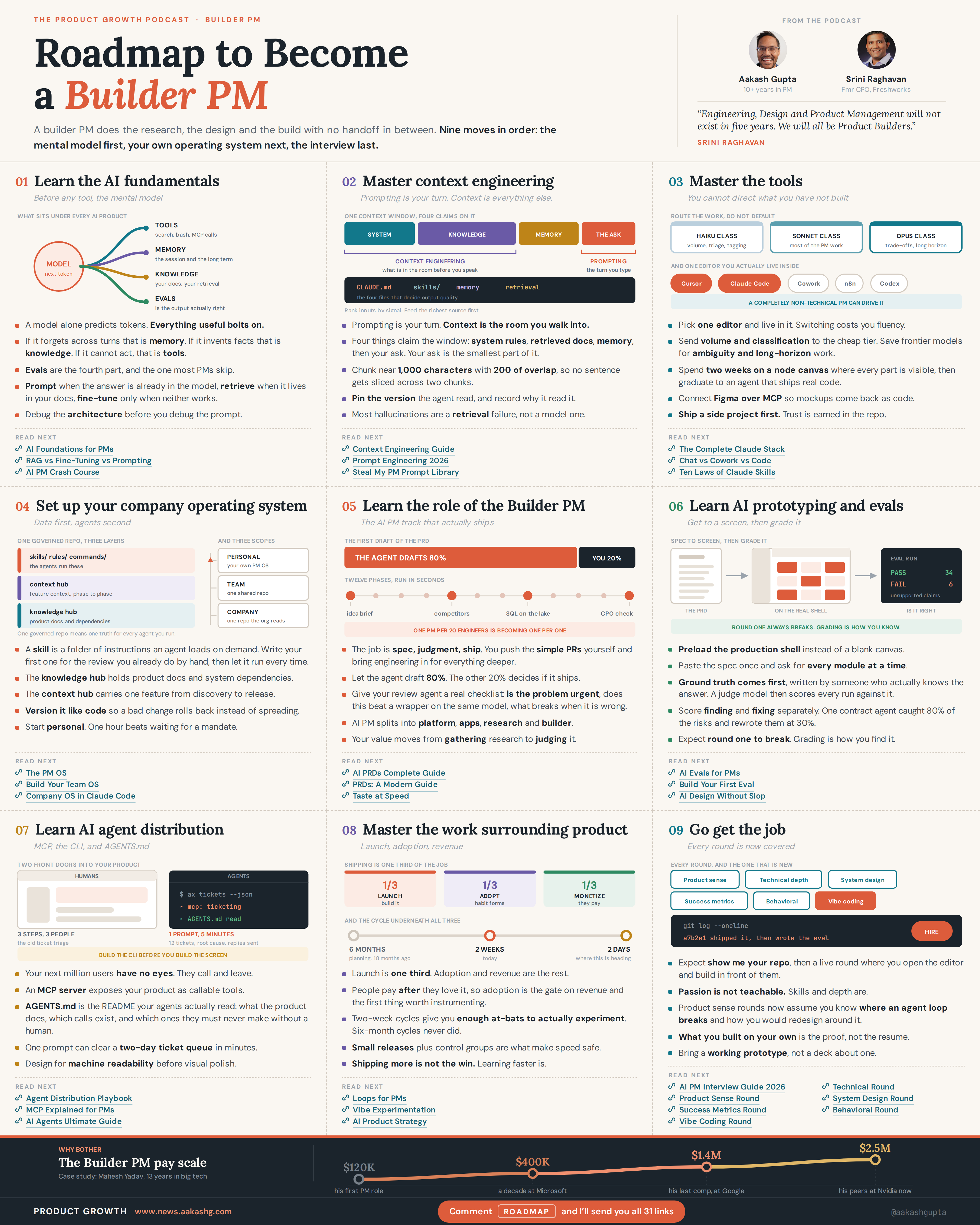
Pay close attention to step 8. Since one person can now run this assembly line, that person also owns whether the thing made any money.
In the full episode, he also covers how Freshworks’ agent builder works, how CPOs can replicate his playbook more. Check it out: Apple, Spotify., YouTube.
Get more of Srini
Freshworks is hiring and you can find Srini on LinkedIn. He also generously shared his deck.
Since the episode was recorded, Srini actually left Freshworks. With his tenure as CPO at RingCentral, SVP at Five9, and Director at Cisco, I’d expect you see him at another high-powered role soon.
Go Deeper
Hear from more CPOs on becoming AI native: Rachel Wolan, Jiaona Zhang
Learn more about becoming a Builder PM: Mahesh Yadav
Explore other Coding Harnesses: Codex, Claude Code
PS. Please subscribe on YouTube and follow on Apple & Spotify. It helps!