Check out the conversation on Apple, Spotify and YouTube.
Brought to you by:

Linear: Plan and build products like the best.
Today’s Episode
Some PM jobs pay $700K+. Others pay $140K.
But the PMs aren’t much different.
It’s more about what companies they work at and how they job search. Today’s episode with Alex Recheveskiy is a breakdown into their methods.
As a PM at Google, Alex was making $900K+, and he drops all his secrets coaching 100s of others:
Your Newsletter Subscriber Bonus
For subscribers, each episode I also write up a newsletter version of the podcast. Thank you for having me in your inbox.
Today, we cover:
How to Build your Resume with AI
How to Apply to Jobs using AI
How to Ace Interviews with AI
1. How to Build your Resume with AI
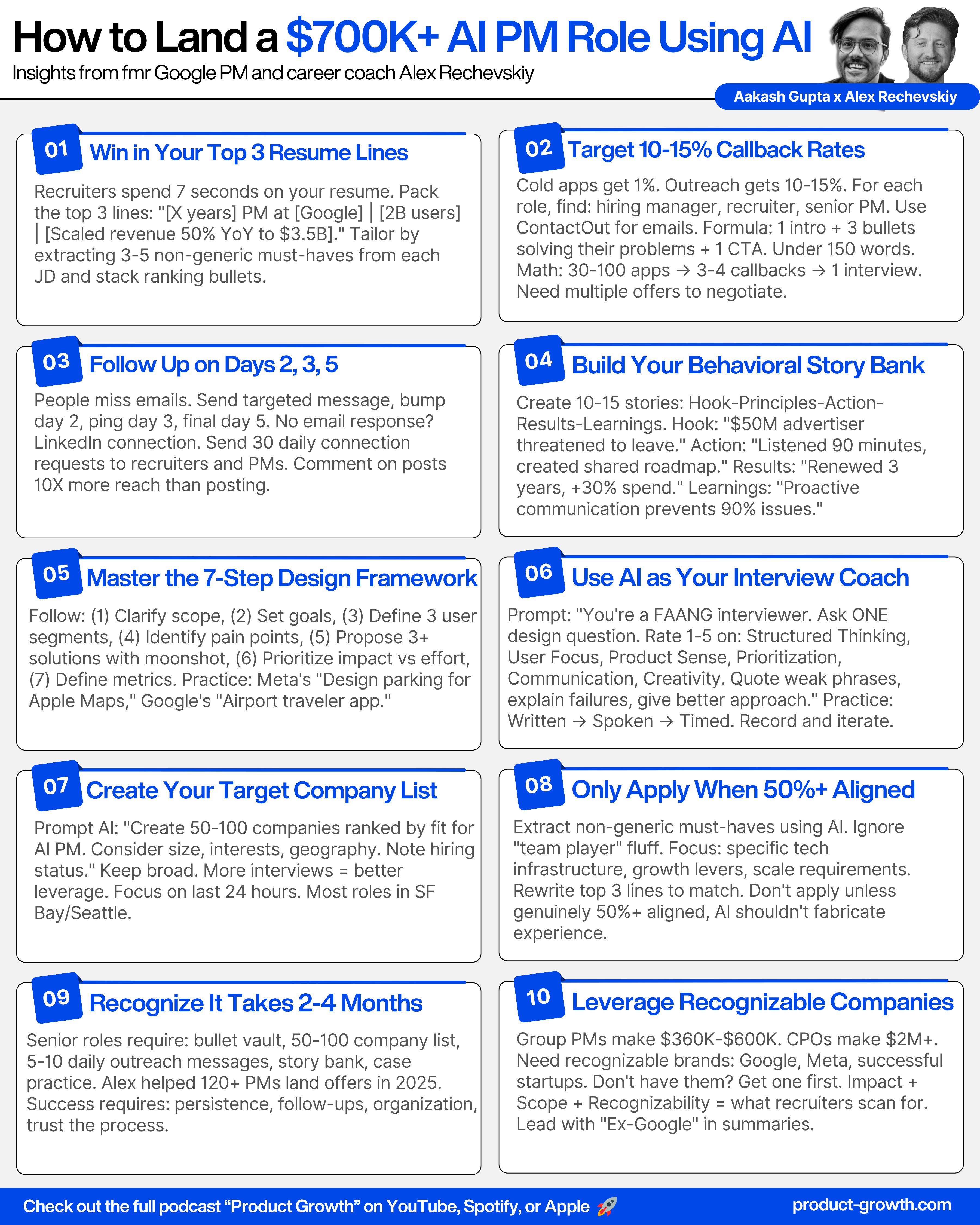
Recruiters spend 7 seconds on your resume. They scan for: Impact, Scope and Recognizability.
1a. Gather Your Raw Material
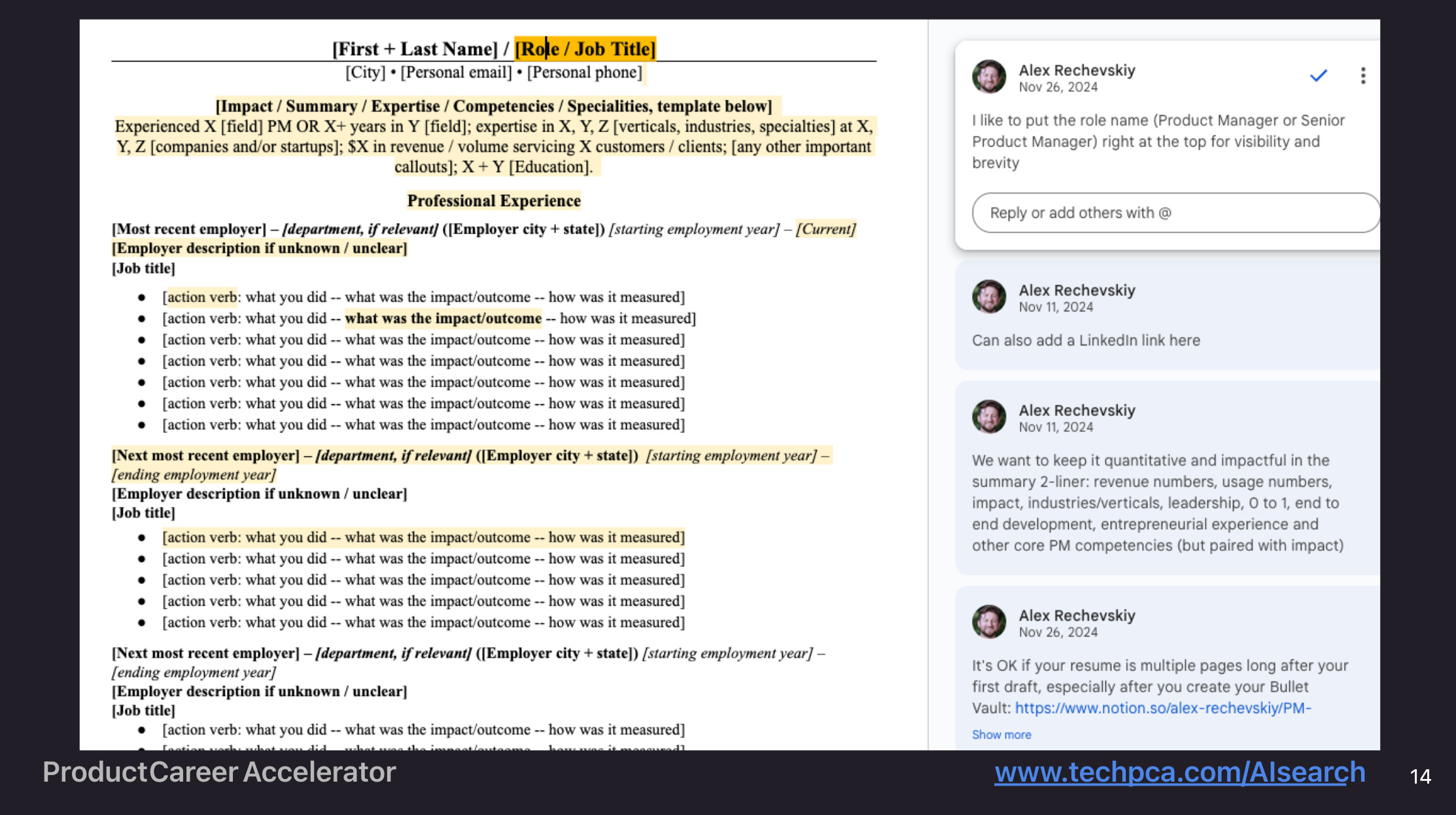
Open a doc. Brain dump for every past role:
Projects you worked on + impact
Problems you solved (customers, revenue, growth)
Obstacles you overcame
Tools/methodologies you introduced
People you mentored + results
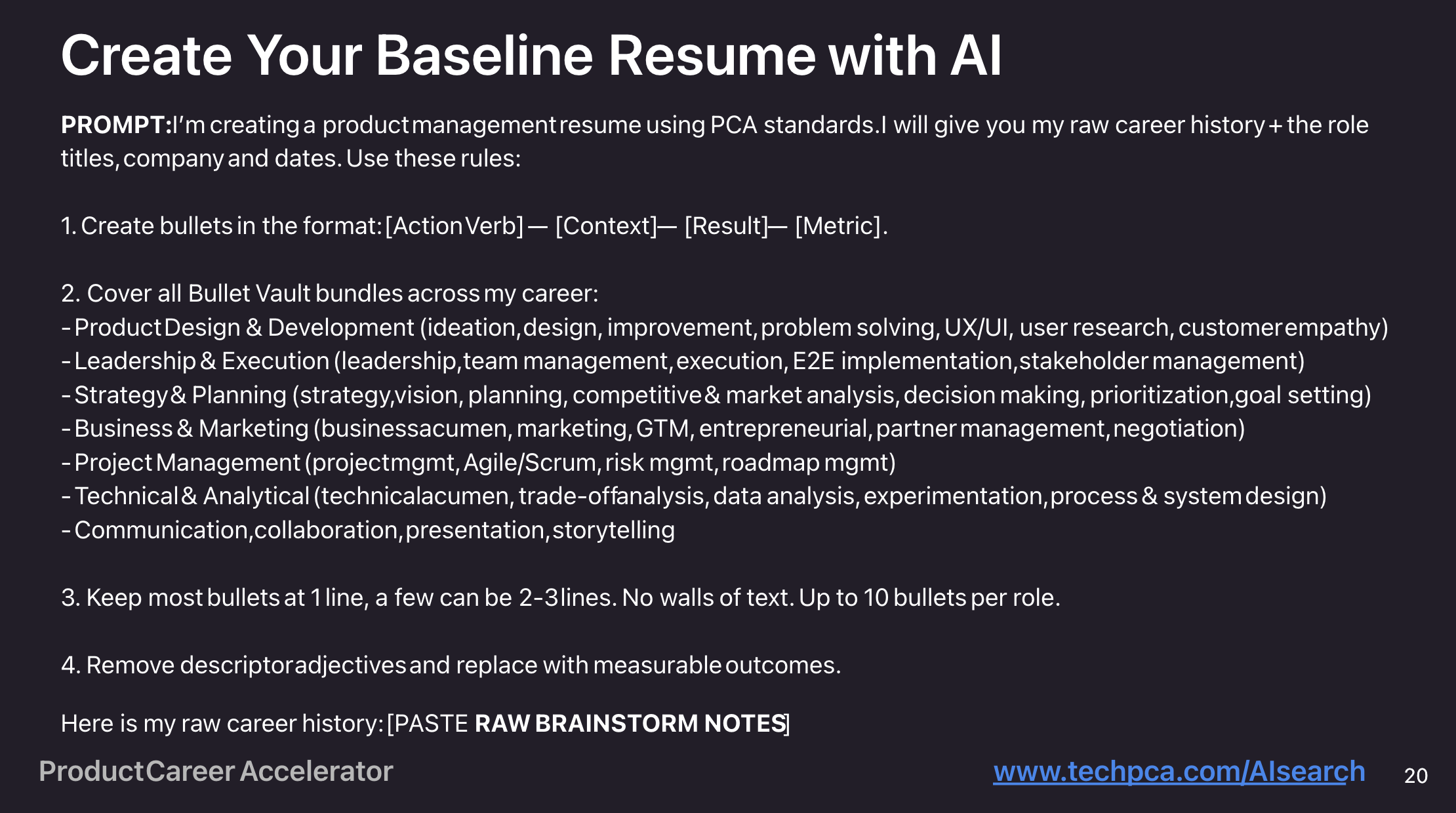
1b. Create Your Resume with AI
Use this prompt with the dump to get your base resume:
1c. Tailor it in 5 Minutes
Customize your resume for each role:
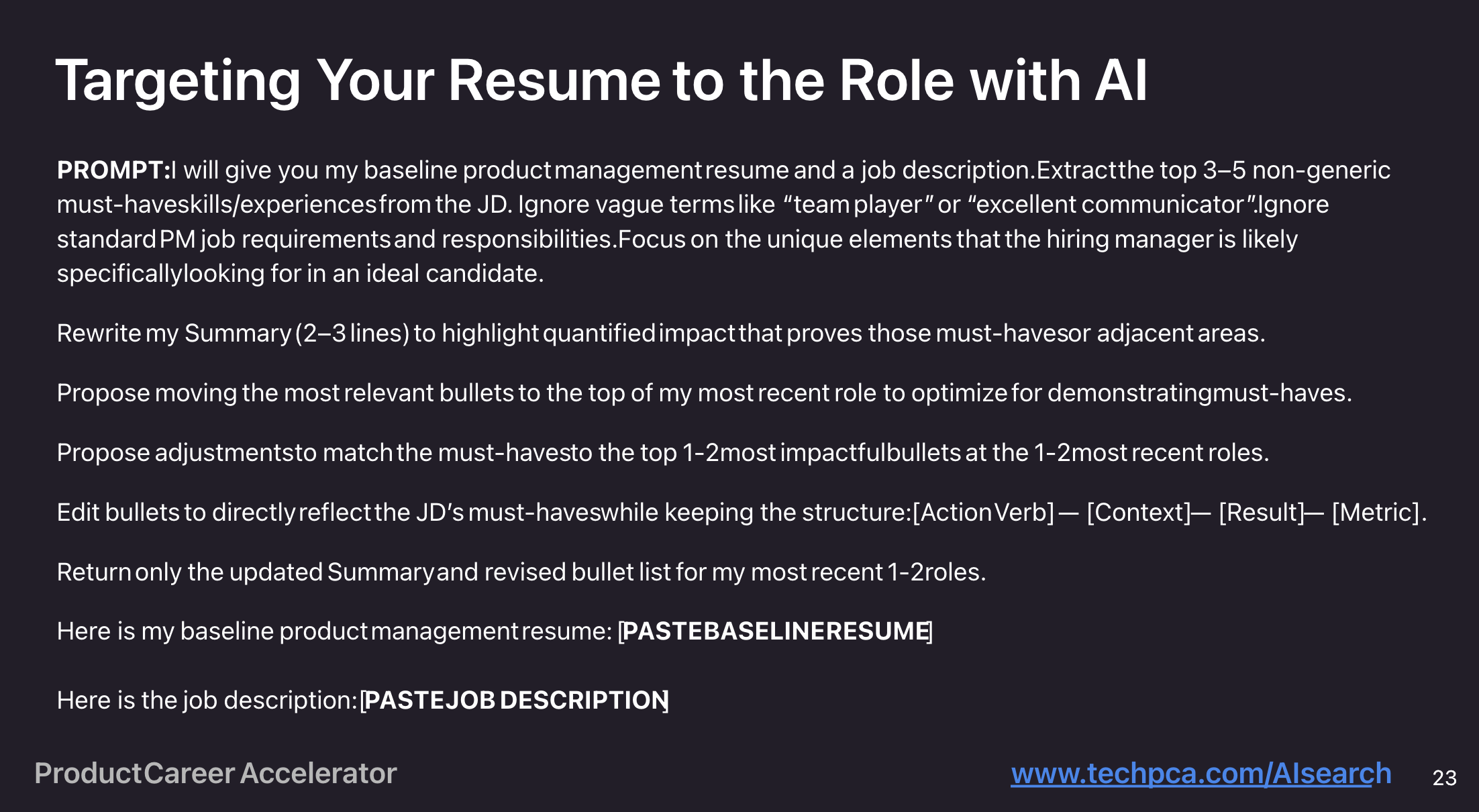
Rewrite your top 3 lines to speak directly to those must-haves.
Stack rank your bullets - move relevant ones to the top.
Rule: Only apply if 50%+ aligned.
2. How to Apply to Jobs using AI
Cold apps: 1% callback. Outreach + app: 10-15% callback.
2a. Build Your Target Company List
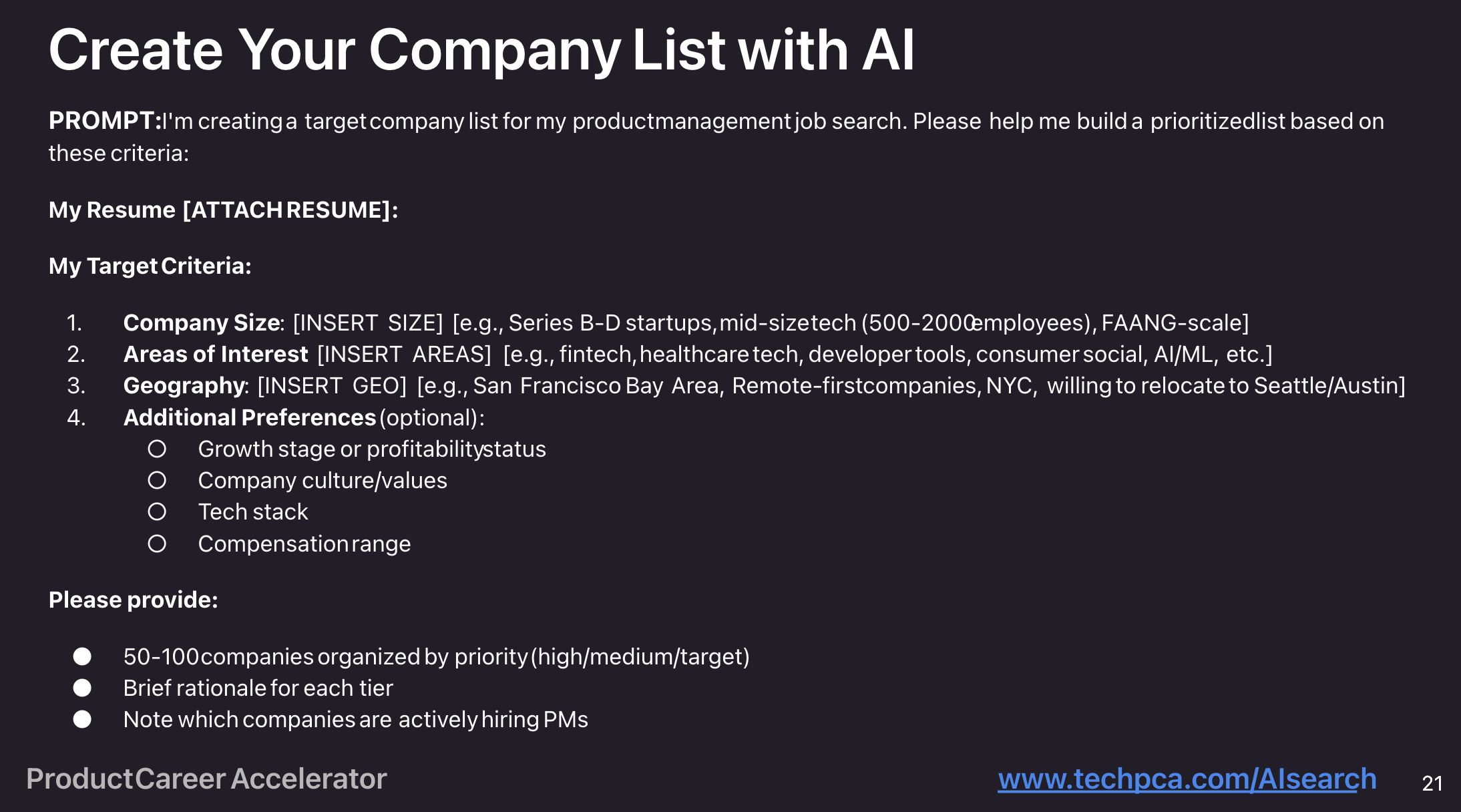
Keep your search broad. More interviews = more offers = better leverage.
2b. Find the Right People
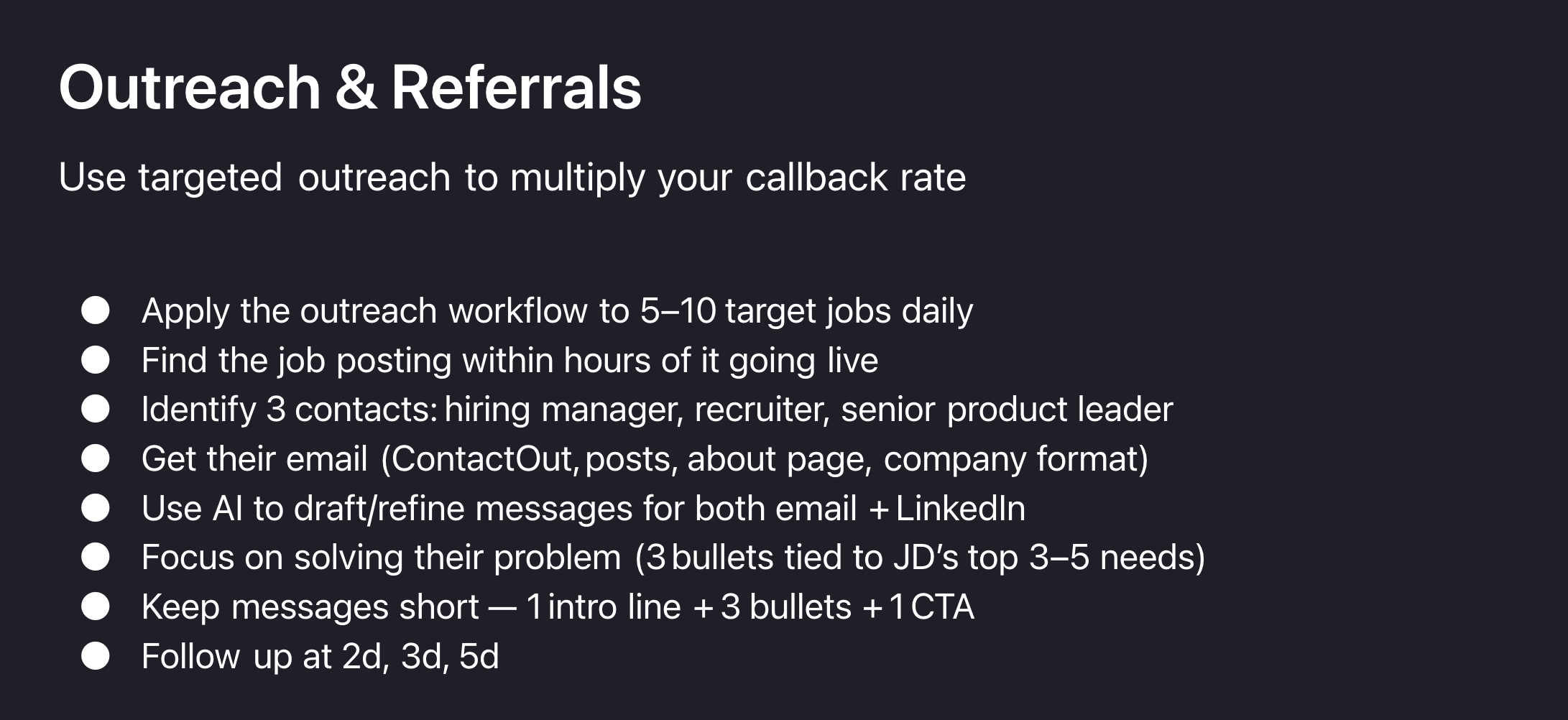
For every job, find 3 people:
Hiring manager
Recruiter (search “[Company] product recruiter”)
Senior PM for referral
LinkedIn search: “[Company] product manager [level]”
Get emails: Use Apollo.io (50 free/month)
2c. Send a Targeted Message
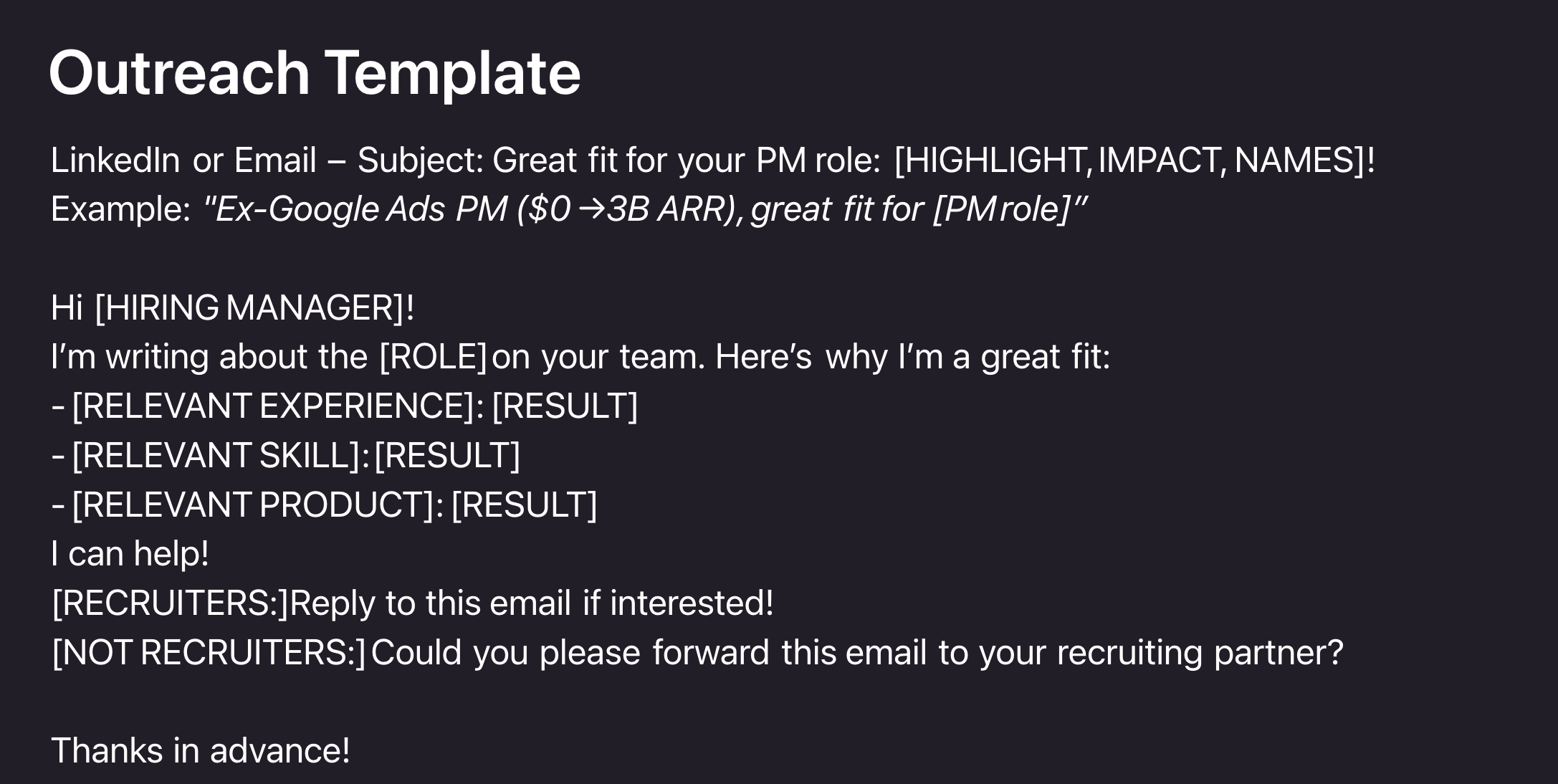
Formula: 1 intro + 3 bullets + 1 CTA. Under 150 words.
3. How to Ace Interviews with AI
3a. Behavioral Interviews: The 5-Step Framework
Don’t use STAR. use HPARL:
Hook – Promise you’ll answer, make them want to listen
Principles – Your thinking and approach
Action – What you specifically did (use “I”)
Results – Quantified business/user/team outcomes
Learnings – Takeaways that changed your approach
Build 10-15 stories with this. (Complete guide)
3b. Product Design/Case Interviews
Use this 7-Step Framework:
Clarify (1-3 min)
Set Goals (1-3 min)
Define Users (3-7 min)
Identify Pain Points (5-7 min)
Propose Solutions (5-7 min)
Prioritize (3-5 min)
Define Metrics (3-5 min)
Then, plug the mock into this AI coach for feedback:
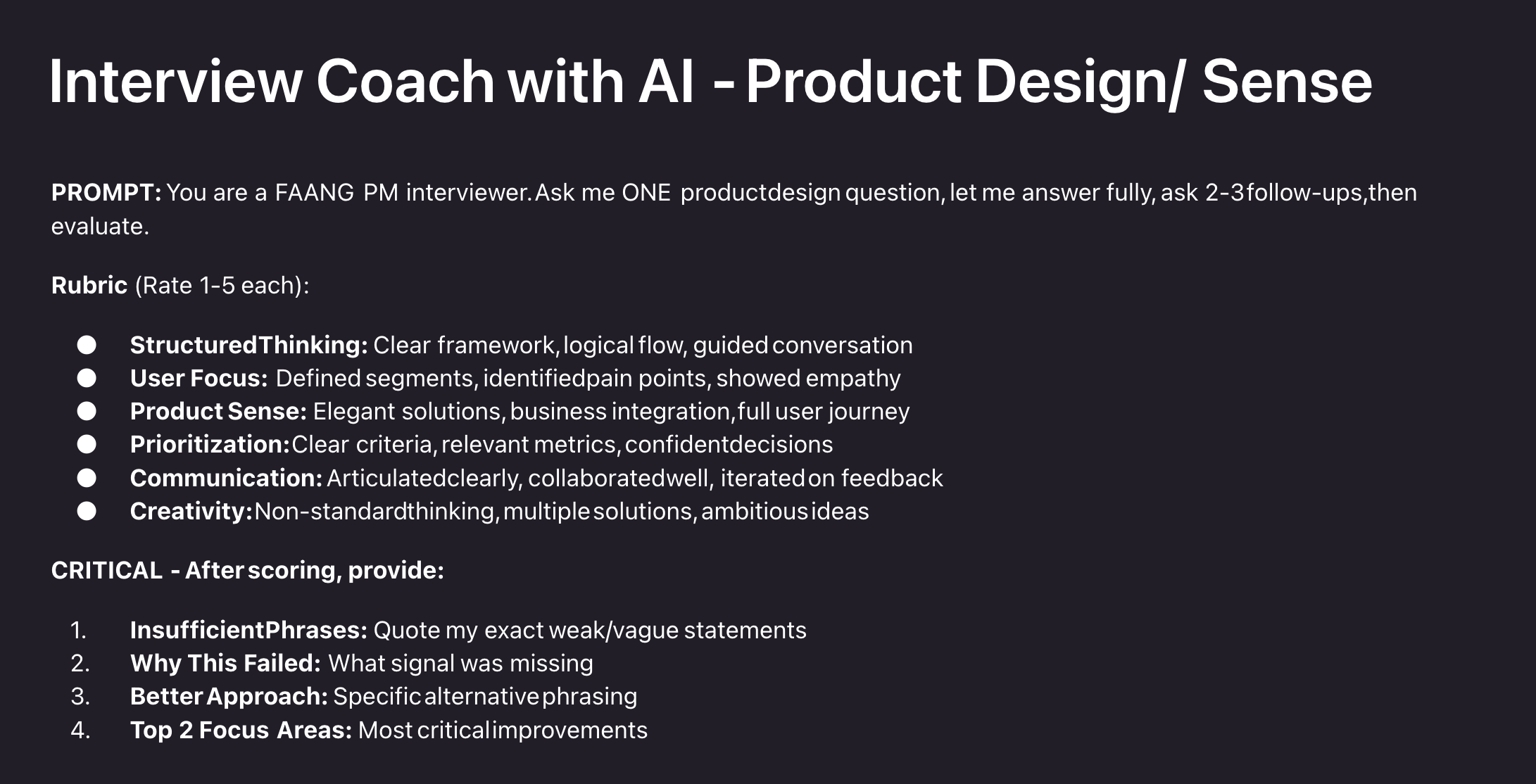
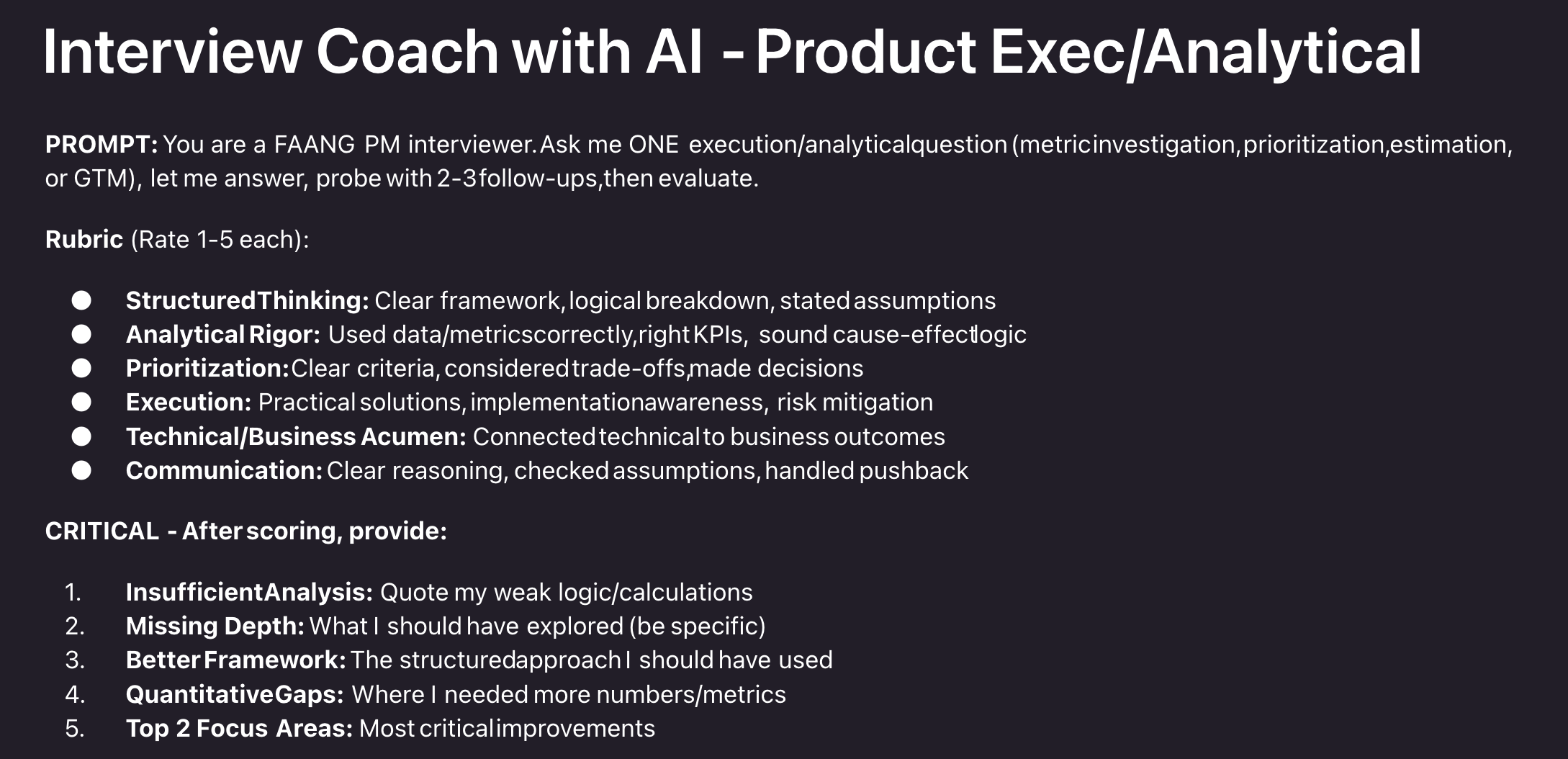
3c. Execution & Analytical Interviews
Use this guide to master execution interviews. Then plug mocks into this coach:
Where to Find Alex Rechevskiy
Related Content
Podcasts:
Newsletters:
FAQ
Q: How long do recruiters look at resumes?
A: Just 7 seconds. They scan for three things: your impact (what you achieved), scope (how big the project), and recognizability (brand names they know). That’s why every line needs to hit hard immediately.
Q: What’s the callback rate difference between cold applications vs outreach?
A: Cold applications get you 1% callbacks. Combine outreach with your application and you jump to 10-15%. The math is clear—personalized messages to hiring managers work.
Q: Why shouldn’t I use the STAR method for interviews?
A: STAR is basic. HPARL is better: Hook (grab attention), Principles (your thinking), Action (what you did), Results (quantified outcomes), Learnings (what changed). It tells a complete story that interviewers remember.
Q: How many companies should I apply to?
A: Cast a wide net. More interviews mean more offers, which gives you negotiating leverage. Don’t limit yourself to 5-10 dream companies. Apply broadly, then get selective with offers.
Q: Should I customize my resume for every job?
A: Yes, but it takes 5 minutes. Rewrite your top 3 lines to match their requirements. Reorder bullets to put relevant experience first. Only apply if you’re 50%+ aligned anyway.
Q: Who should I reach out to at each company?
A: Three people: the hiring manager (decision maker), a recruiter (gatekeeper), and a senior PM (for referrals). Use LinkedIn search and Apollo.io to find emails. Hit all three channels.
Q: How long should my outreach message be?
A: Under 150 words. One intro sentence, three bullets showing why you’re relevant, one clear call-to-action. Anything longer gets ignored. Recruiters are busy—respect their time.
Q: How many interview stories should I prepare?
A: 10-15 stories using the HPARL framework. Cover different themes: leadership, failure, innovation, conflict, growth. Practice until you can deliver them conversationally, not like you’re reading a script.
This article was updated on March 20, 2026#
PS. Please subscribe on YouTube and follow on Apple & Spotify. It helps!