
The cost of building features went to nearly zero in the last three years. Engineers using Claude Code and Cursor ship in hours what used to take days.
So what happens to product strategy when execution gets this cheap?
As Boris Cherny, the creator of Claude Code said, everyone becomes a product builder or product manager:
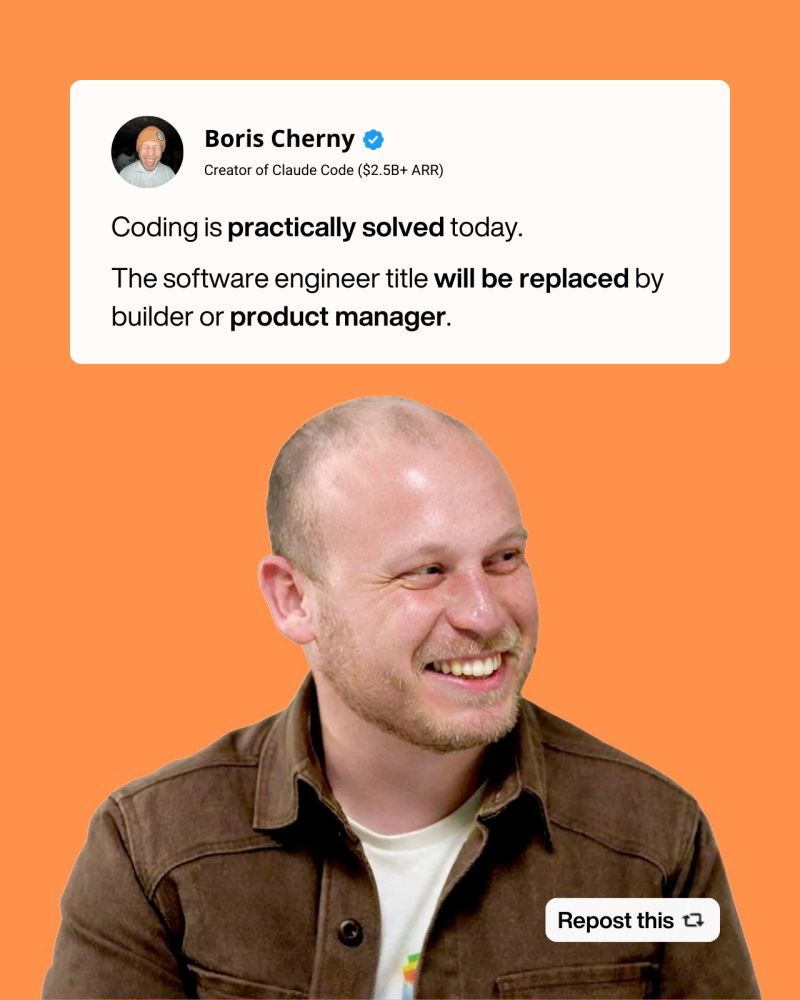
As everyone becomes a product manager or product builder, everyone needs to excel in product strategy. So that’s what I’m enabling with today’s post.
I gave a keynote at Northeastern University that breaks everything down - and the video is finally ready:
500+ PMs paid $1,000+ to see it live. You get it free today.
Today’s Post
I’m accompanying my keynote with an up-to-date deep dive on how to build an awesome AI product strategy in March 2026:
Why strategy was always important
Why AI just made strategy more important
The 4 reasons why most strategies fail, so you can avoid them
The 7-step framework I’ve used across Epic Games, Affirm, and Apollo
How to actually build this with Claude Code
How to communicate your strategy
1. Why strategy was always important for PMs
Go ask any engineer or designer on your team right now: what’s your product strategy?
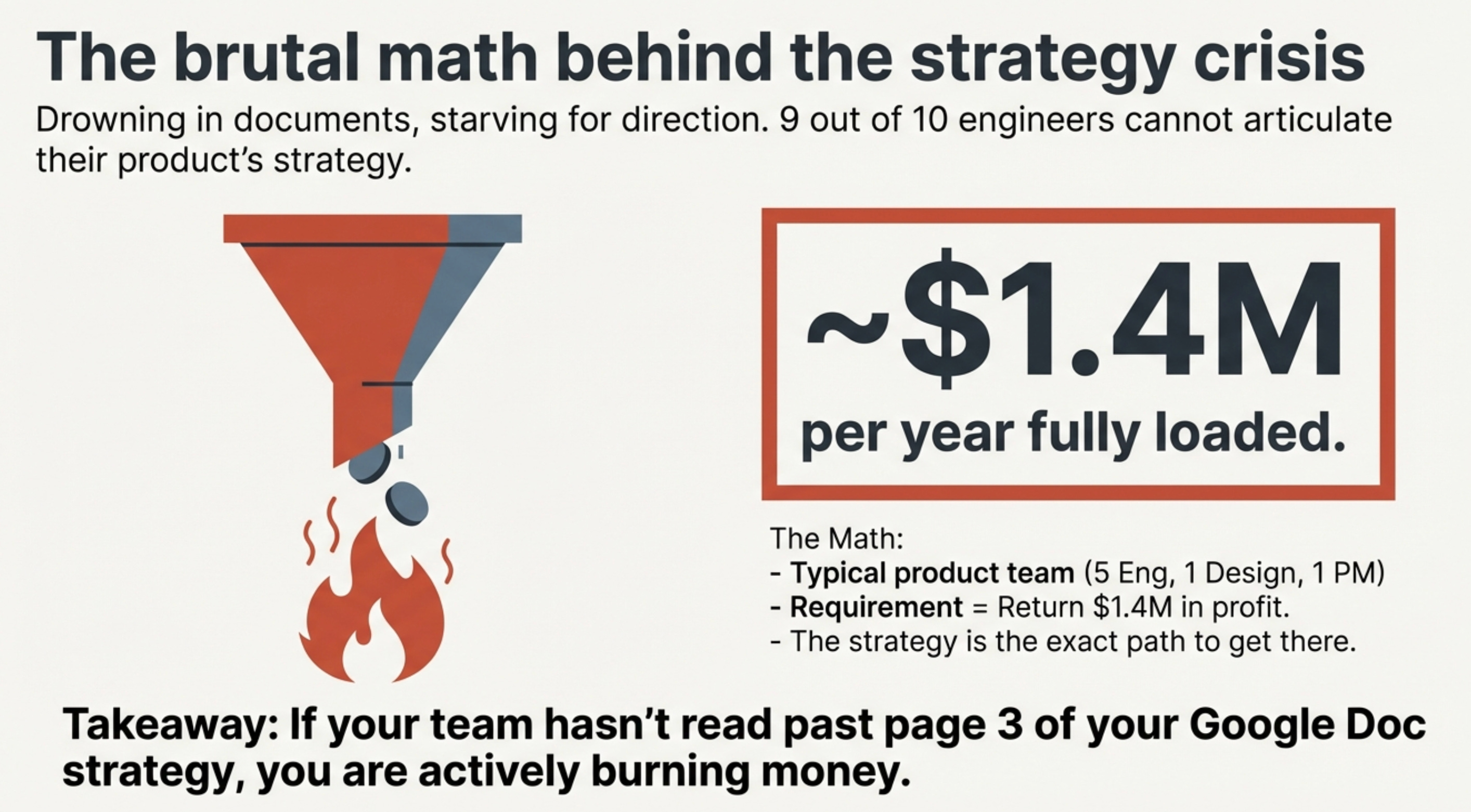
9 out of 10 won’t be able to tell you.
That’s not a hypothetical. I’ve seen this at every company I’ve worked at. The strategy exists somewhere in a Google Doc. Nobody has read it past page 3. Nobody remembers it a month later.
I call this the strategy crisis.
We are drowning in documents and starving for direction.
And here’s the brutal math. A typical product team - 5 engineers, 1 designer, 1 PM - costs around $1.4M per year fully loaded. That team needs to return $1.4M in profit.
The product strategy is how you outline the path to get there. If nobody on that team can articulate the strategy, you’re burning money.
2. Why AI just made strategy more important
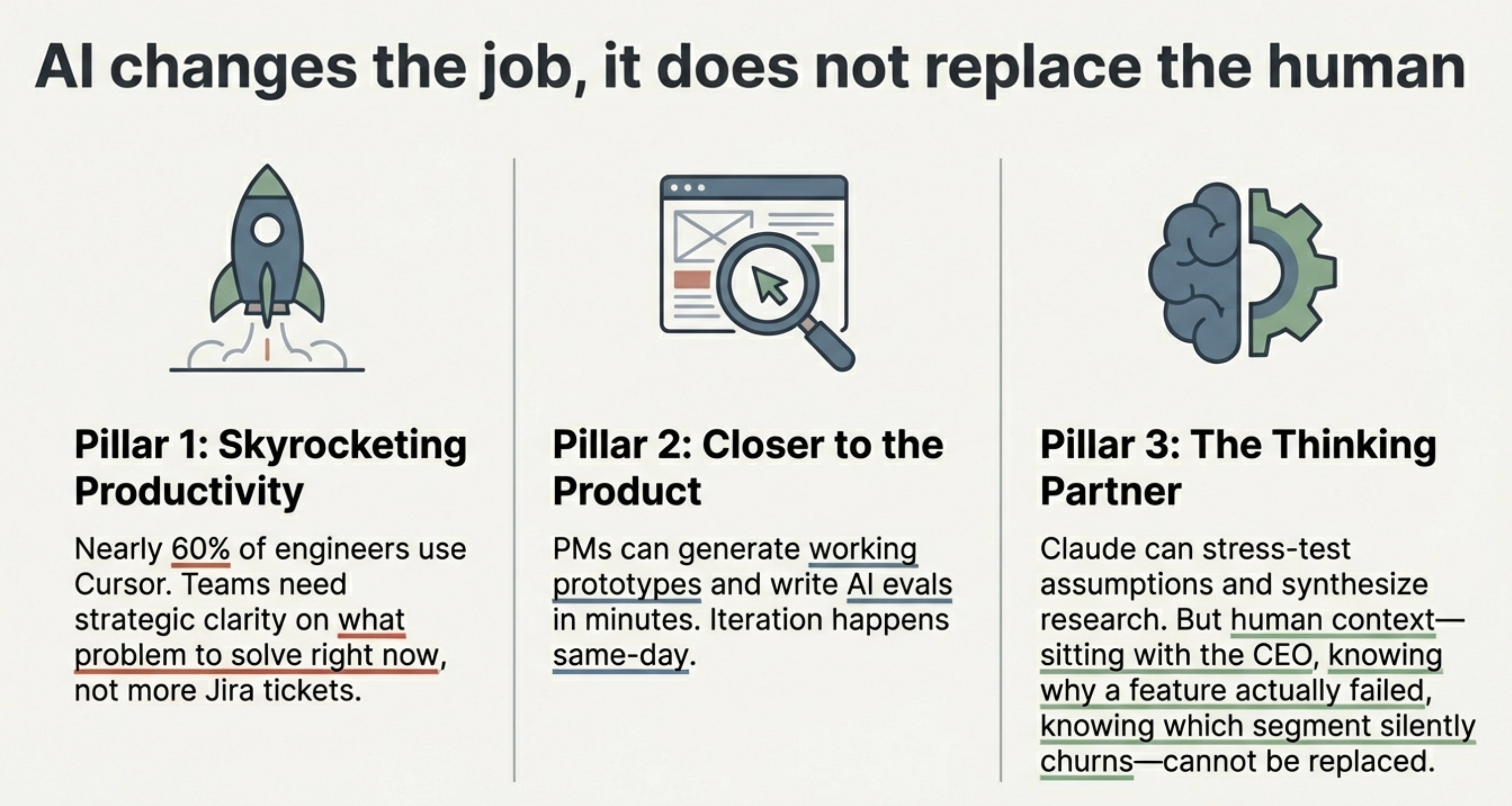
AI has not replaced PMs. But it has changed the job, in three ways:
Pillar 1 - Engineers and designers are more productive than ever
Engineers are using Cursor and Claude Code to do 10x what they used to. Things that used to take days are now a text prompt.
What does that mean? Your team needs better direction, not more tickets. Actual strategic clarity on what problem they’re solving and why it matters right now.
Engineers and designers are getting closer to the details of product features. But they still need a strategic partner for the overall direction.
Pillar 2 - PMs are getting closer to the product
At the same time as engineers and designers are getting closer to the product, so are PMs:
AI prototyping tools like Lovable, Bolt, v0, and Replit mean you can generate a working prototype in under a minute. You can write evals for your AI features yourself.
If you have Claude Code into your code base, you might even push a PR straight to a code reviewer on engineering. You can iterate on front-end and test it the same day.
This makes having a clear strategic direction for that execution more important than ever.
Pillar 3 - AI as a thinking partner, not a replacement
You can now use MCP with Claude Code to get AI to completely write your strategy document for you. But don’t let great documents delude you. The AI rarely does great original thinking.
It can’t replace the judgment you build from sitting with your CEO every week. Watching which features failed and why. Knowing which customer segment churns but nobody publicly admits.
AI can help you stress-test assumptions, synthesize research, and pressure-test whether your objective is specific enough.
But it can’t think for you.
Use AI as a thinking partner, not a replacement.
3. The 4 reasons why most strategies fail, so you can avoid them
I have read a lot of product strategy documents over my career. Sadly, most strategies aren’t worth the paper they’re printed on.
Here’s the pattern:
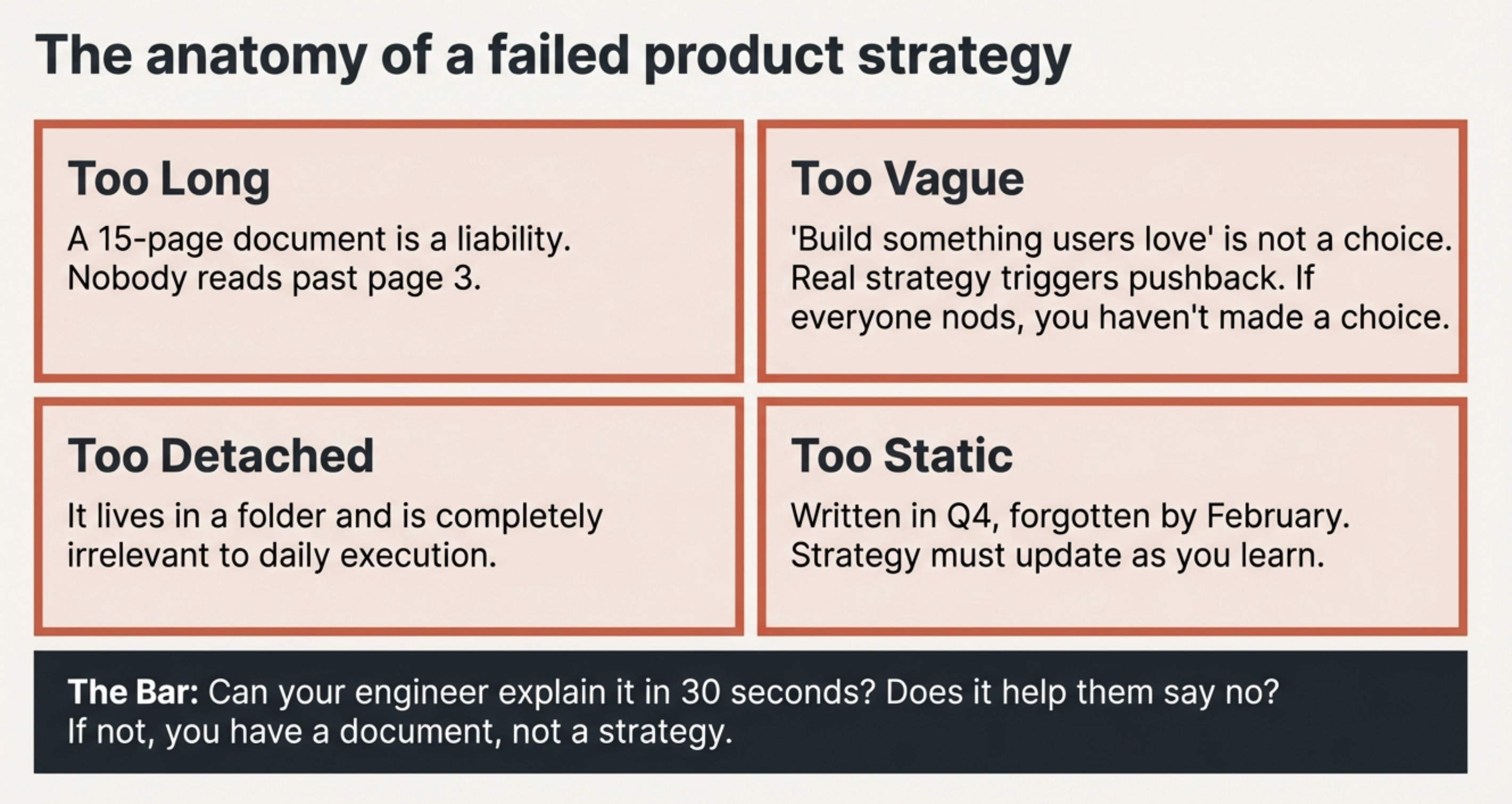
Too long. A 15-page strategy doc is not a strategy. It’s a liability. Nobody reads past page 3.
Too vague. “We will build a product customers love.” Everyone agrees. That’s not a choice. Real strategy makes choices that some people in the room will push back on. If everyone nods when you present it, you haven’t made any real choices yet.
Too detached. The strategy lives in a doc the team never needs to reference to do their daily work. That means it has nothing to do with actual execution.
Too static. Written in Q4, forgotten by February. With your team moving faster than ever, strategy needs to update as you learn - not once a year.
The test I use: can your engineer or designer explain the strategy in 30 seconds? Can they make decisions based on it? Does it help them say no to things?
If not, you have a document, not a strategy.
4. The 7-step framework
My favorite framework for 7 steps was covered all the way back in 2023 with Ed Biden. Today, I’m updating it for 2026:
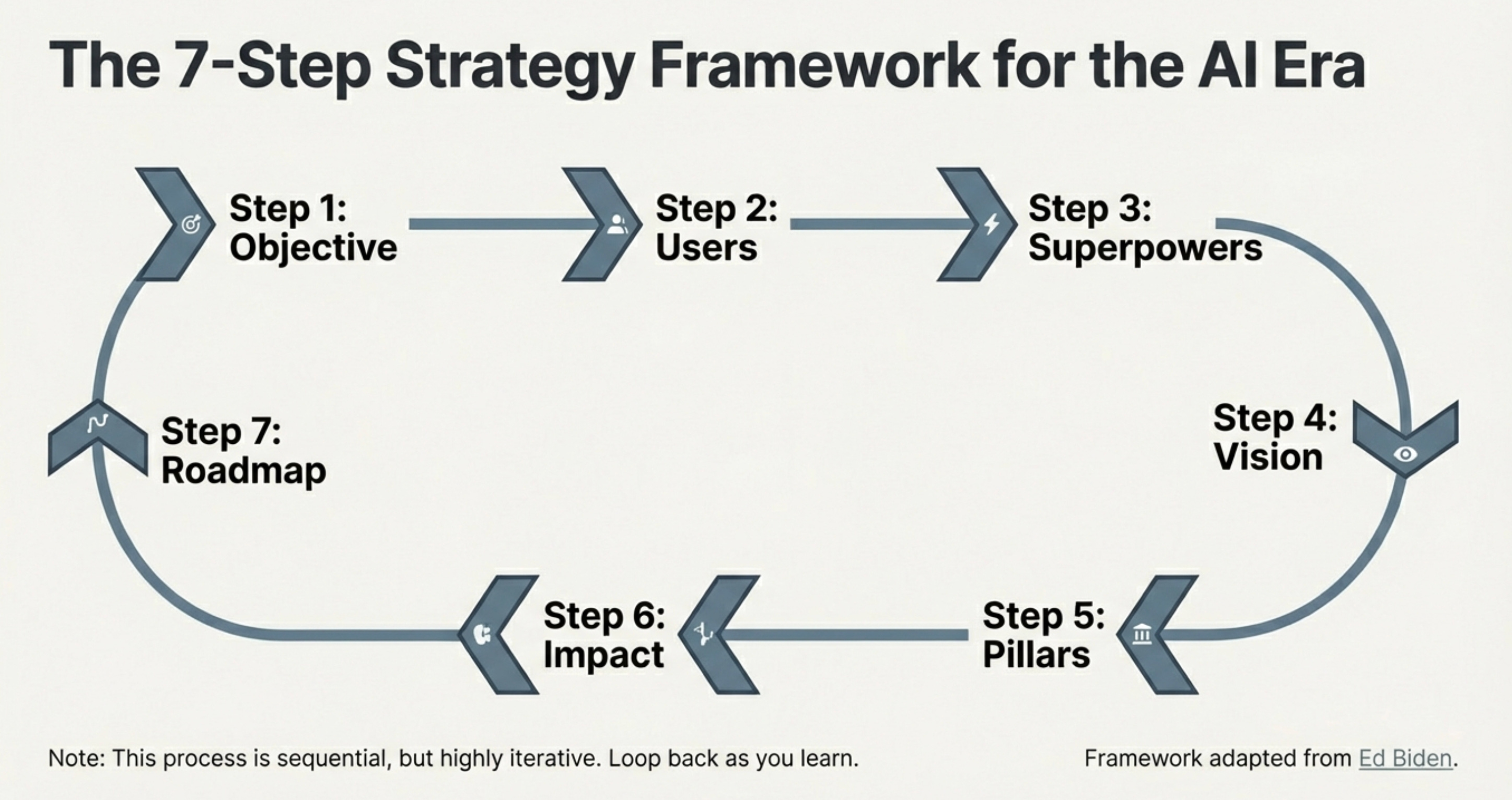
The 7 steps:
Objective
Users
Superpowers
Vision
Pillars
Impact
Roadmap
Sequential. But also iterative - you’ll loop back constantly.
Let me break each one down in-depth.
**Paid subscribers get my full step-by-step guide to using Claude Code to build strategy, the slides from my talk, 1-page strategy template, and real strategy doc examples.**